Quantum Key Distribution
Explore 148 companies developing quantum-safe communication and encryption technologies
What is QKD?
Quantum Key Distribution (QKD) is a secure communication method that uses quantum mechanics principles to generate encryption keys. Unlike classical encryption, QKD's security is based on the laws of physics rather than computational complexity, making it theoretically immune to attacks by quantum computers. Any attempt to intercept the quantum signals disturbs them in detectable ways, alerting users to eavesdropping attempts.
Key QKD Technologies
BB84 Protocol
The original QKD protocol using polarized photons. Forms the basis of most commercial QKD systems deployed today.
Satellite QKD
Uses satellites to distribute quantum keys over intercontinental distances, overcoming fiber optic range limitations.
CV-QKD
Continuous Variable QKD uses standard telecom components, enabling easier integration with existing fiber infrastructure.
QKD & Quantum Communications Companies

Abe Quantum Solutions
Abe Quantum Solutions is a Canadian quantum communication company developing quantum key distribution systems and quantum secure communication networks for enterprise and government applications. The company specializes in practical quantum cryptography implementations, quantum network infrastructure, and secure quantum communication protocols for protecting sensitive data transmission. Abe Quantum provides consulting services for quantum security implementations and develops custom quantum communication solutions for organizations requiring the highest levels of security for their data transmission and communication networks, contributing to Canada's quantum technology ecosystem and advancing quantum cryptography applications for critical infrastructure protection.

ADVA Optical
ADVA Optical Networking (now Adtran Networks following 2022 merger) is a German telecommunications equipment company founded in 1994, headquartered in Munich and Meiningen. ADVA develops quantum-safe networking solutions including quantum key distribution (QKD) integration, optical network infrastructure for quantum communications, and post-quantum cryptography implementations. The company collaborates with quantum technology providers and telecommunications operators deploying quantum-safe optical networks across Europe. ADVA serves telecommunications operators, enterprises, government agencies, and critical infrastructure sectors requiring quantum-safe communications and quantum network infrastructure. The company contributes to European quantum communication infrastructure development advancing quantum-safe networking and preparing telecommunications infrastructure for quantum internet and post-quantum security transitions protecting optical network security against quantum computing threats.
Aegiq
Aegiq is a UK-based full-stack photonic quantum computing company spun out from the University of Sheffield in 2019, developing secure quantum communications using III-V semiconductor-based quantum photonics chips manufactured with elements like Gallium, Indium, and Arsenic rather than traditional Silicon. The company secured £1.4 million in funding from Innovate UK and won a £30 million quantum testbed competition funded by the National Quantum Computing Centre to deliver Artemis, their compact photonic quantum computer. Building on over 20 years of world-class research in semiconductors and quantum science, Aegiq develops quantum technology for fiber-optic and satellite-based applications, focusing on secure quantum communications and photonic quantum computing with their dedicated user interface for integration with NQCC testbed ecosystem.

Aires Applied Technology
Aires Applied Technology is a deep tech startup specializing in decentralized quantum security with customized encryption solutions including post-quantum cryptography. The company develops quantum-safe cryptographic systems and security solutions to protect against quantum computer threats. Aires Applied contributes to Singapore's quantum technology ecosystem by addressing critical cybersecurity challenges in the quantum era, providing customized security solutions for government and enterprise customers.

Amazon Braket
In 2024-2025, Amazon Braket expanded significantly through partnerships and hardware additions. NVIDIA and AWS announced a collaboration to advance quantum computing research by integrating NVIDIA's quantum-classical computing platform, NVIDIA CUDA-Q, with Amazon Braket, allowing researchers to leverage hybrid quantum-classical workflows. IQM Quantum Computers made its 20-qubit quantum processing unit, IQM Garnet, available through Amazon Braket in the AWS Europe (Stockholm) Region, marking the first quantum processing unit available to AWS customers within the European Union in a self-service, on-demand model. IonQ announced continued collaboration with AWS, making IonQ's Forte system (delivering 36 algorithmic qubits) available on Amazon Braket. Amazon Braket continues to provide access to multiple quantum hardware providers including QuEra's 256-qubit Aquila neutral atom system, supporting the AQC25 conference bringing together stakeholders from MIT, Yale, USC, Google Quantum AI, and others.
Antaris
Antaris is a digital space platform company founded in 2021 and headquartered in Los Altos, California, simplifying the design, simulation, and operation of satellites. In March 2024, Antaris partnered with SpeQtral to jointly deploy quantum-safe key distribution satellites, integrating SpeQtral's quantum payloads with Antaris SatOS space vehicle software and partner bus platforms. The partnership expects to deliver the first customer spacecraft to orbit from as early as 2026, enabling commercial quantum-secure satellite communications. Antaris brings expertise from Planet Labs, Microsoft, Diamanti, CoreOS, and AMD to quantum space communications. The company raised $14.16 million to develop its satellite operating system and quantum payload integration capabilities. Antaris serves government agencies, defense organizations, telecommunications operators, and commercial satellite operators requiring quantum-safe communications from space for critical infrastructure protection.

Argonne National Laboratory
Argonne National Laboratory is a USA national laboratory founded July 1, 1946, located in Lemont, Illinois, operated by University of Chicago for United States Department of Energy. Argonne pursues research spanning theory, algorithms, simulations, and modeling of quantum systems leveraging supercomputing resources and multi-qubit hardware platforms. The laboratory operates quantum computing testbeds integrating quantum processors with high-performance computing infrastructure enabling hybrid quantum-classical algorithms. Argonne conducts quantum computing research across superconducting qubits, quantum algorithms, quantum networking, and quantum simulation applications. The laboratory is one of five DOE National Quantum Information Science Research Centers with over 1,500 experts collaborating across quantum research initiatives. Argonne serves scientific research community, government agencies, and industry partners requiring quantum computing applications in chemistry, materials science, optimization, and machine learning advancing quantum computational advantage for national security and energy applications.

AROBS Polska
AROBS Polska is a Polish technology company, part of AROBS Transilvania Software, serving as prime contractor for ESA's Post-Quantum Satellite Communication Security project announced in March 2025. The company will develop hardware, firmware, and cryptographic IP core for the PQC ASTrAL (Post-Quantum Cryptography for Aerospace and Telecommunications) satellite communication security system, partnering with ResQuant as subcontractor specializing in hardware-implemented cryptographic solutions handling cryptographic aspects. The project develops post-quantum cryptography solutions for satellite communications protecting against quantum computing threats. AROBS Polska brings expertise in aerospace software development, embedded systems, and secure communications to space-based quantum-safe cryptography. The company serves European Space Agency, satellite operators, telecommunications providers, and defense organizations requiring post-quantum cryptographic protection for satellite communications systems. AROBS Polska focuses on practical implementation of NIST-approved PQC algorithms for space systems, ensuring long-term security of satellite communications against emerging quantum computing capabilities.

AT&T Quantum
AT&T is researching quantum technologies for telecommunications applications including quantum key distribution, quantum-safe cryptography, and quantum networking infrastructure for secure communications. The company explores quantum technologies for network optimization, quantum-enhanced security protocols, and quantum communication systems that could provide ultra-secure connectivity for government, enterprise, and consumer applications. AT&T collaborates with quantum technology companies and research institutions to develop quantum networking capabilities, investigate quantum advantages for telecommunications infrastructure, and prepare network systems for quantum-safe security implementations. The company's quantum research focuses on practical quantum applications that could enhance network security, improve communication reliability, and enable new quantum-enhanced services for customers requiring the highest levels of security and performance.

Banco de Santander Quantum Division
Banco de Santander is a Spanish multinational financial services company founded in 1857 and headquartered in Madrid, Spain, with Quantum Division focusing on quantum-safe financial services and quantum cryptography implementations. Santander participates in Spain's QKD-GEO quantum key distribution geostationary satellite mission analyzing real use cases with Hispasat, BBVA, Telefónica, and Cellnex for quantum-secure banking communications. The bank invests in quantum-safe security technologies preparing financial infrastructure for post-quantum cryptography era and quantum computing threats to current encryption protecting financial transactions and customer data. Santander explores quantum key distribution for ultra-secure banking communications, post-quantum cryptography for protecting financial data, and quantum-safe blockchain implementations for digital banking services. The company collaborates with quantum security providers implementing NIST-approved PQC algorithms across banking infrastructure. Banco de Santander serves global banking markets requiring quantum-safe financial services, secure payment systems, and quantum-resistant cryptography protecting customer transactions, financial data, and banking communications against quantum computing threats.
BBN Technologies
BBN Technologies (Raytheon BBN Technologies) is a high-technology research and development company based in Cambridge, Massachusetts, founded in 1948, conducting superconducting quantum computing research. BBN Technologies is recognized among companies conducting research in superconducting quantum computing alongside Google, IBM, Rigetti, and Intel. The organization developed quantum communication protocols and quantum networking technologies, contributing to early quantum key distribution systems and quantum network architectures. BBN Technologies, now part of Raytheon Technologies, conducts quantum computing research focused on quantum processors, quantum networking, and quantum algorithms. The company serves government agencies and research institutions requiring advanced quantum technologies for secure communications, quantum computing infrastructure, and quantum information processing applications.

BBVA Quantum Division
Banco Bilbao Vizcaya Argentaria (BBVA) is a Spanish multinational financial services company founded in 1857 (origins) and headquartered in Madrid, Spain, with Quantum Division developing quantum-safe banking technologies and post-quantum cryptography implementations. BBVA participates in Spain's QKD-GEO quantum key distribution geostationary satellite mission analyzing real use cases with Hispasat, Banco de Santander, Telefónica, and Cellnex for quantum-secure financial communications. The bank invests in quantum computing research, quantum-safe security technologies, and post-quantum cryptography preparing financial infrastructure for quantum computing threats to current encryption standards. BBVA explores quantum key distribution for ultra-secure interbank communications, post-quantum cryptography algorithms for protecting financial transactions, and quantum-safe blockchain for digital banking services. The company collaborates with quantum security providers implementing quantum-resistant cryptography across banking systems. BBVA serves global financial markets requiring quantum-safe banking infrastructure, secure payment systems, and quantum-resistant encryption protecting customer data, financial transactions, and banking communications against emerging quantum computing capabilities threatening current cryptographic systems.

Bell Canada
Bell Canada (formally The Bell Telephone Company of Canada) is a Canadian telecommunications company founded in 1880, headquartered in Montreal, Quebec, part of BCE Inc. Bell Canada explores quantum networking research including quantum key distribution (QKD) trials and quantum-safe telecommunications infrastructure. The company collaborates with Canadian quantum technology companies and research institutions including University of Waterloo advancing quantum communications capabilities. Bell investigates quantum encryption for secure telecommunications and quantum networking for future communications infrastructure. The company serves Canadian telecommunications markets, enterprise customers, and government agencies requiring quantum-safe communications and quantum technology exploration. Bell contributes to Canadian quantum technology ecosystem advancing quantum communications research and quantum networking for telecommunications industry supporting Canada quantum technology leadership.

Boeing
Boeing Company is an American multinational aerospace corporation founded July 15, 1916, headquartered in Arlington, Virginia, developing quantum networking and quantum communication technologies through Disruptive Computing & Networks unit serving as company's nexus for quantum research and development. Boeing announced planned 2026 launch of Q4S satellite designed to demonstrate quantum entanglement swapping capabilities on orbit, positioned as world's first quantum entanglement swapping demonstration aboard satellite. Boeing partnered with Chicago Quantum Exchange with $3.5 million investment supporting quantum research and talent development in quantum communications and sensing. Boeing partnered with IBM Quantum on optimization problems for composite materials design used in aircraft wings, joined Northwest Quantum Nexus at University of Washington alongside AWS, and signed DOE's Quantum in Space Collaboration focusing on quantum technologies for space applications. Boeing builds quantum networks connecting quantum devices globally for secure communications and enhanced sensing capabilities serving aerospace and defense quantum technology requirements.

Brookhaven National Laboratory
Brookhaven National Laboratory is a USA national laboratory founded in 1947, located in Upton, New York, operating under United States Department of Energy. Brookhaven leads Co-design Center for Quantum Advantage (C2QA), one of five DOE National Quantum Information Science Research Centers established in 2020, directed by Andrew Houck. C2QA brings together experts to co-design quantum hardware, software, and algorithms to achieve quantum advantage. The laboratory conducts quantum computing research spanning superconducting qubits, quantum algorithms, quantum networking, and quantum sensors. Brookhaven operates quantum computing testbeds and collaborates with over 1,500 experts across 115 academic, industry, and national science institutions. The laboratory serves quantum computing research community, government agencies, and industry partners requiring fundamental quantum research, quantum algorithm development, and quantum hardware co-design advancing towards practical quantum advantage for scientific applications in physics, chemistry, materials science, and national security.

BT Group
BT Group plc (formerly British Telecom) is a British multinational telecommunications company founded in 1846, headquartered in London, United Kingdom. BT conducts pioneering quantum networking research deploying quantum key distribution (QKD) networks and quantum-safe telecommunications infrastructure. The company established quantum-secured network connections and collaborates with quantum technology providers advancing practical quantum communications deployments. BT invests in post-quantum cryptography preparing telecommunications infrastructure for quantum computing threats. BT serves UK telecommunications markets, enterprise customers, government agencies, and critical infrastructure sectors requiring quantum-safe communications and quantum network infrastructure. The company contributes to UK National Quantum Technologies Programme advancing quantum communications and quantum networking for telecommunications industry. BT positions UK as leader in quantum-safe telecommunications protecting communications infrastructure against emerging quantum computing threats.
Caltech
California Institute of Technology is a private research university founded September 23 1891 located in Pasadena California prominent leader in quantum research through Institute for Quantum Information and Matter focusing on theoretical and experimental aspects of quantum information science including quantum computation and quantum many-body physics. In September 2025, Caltech scientists built a record-breaking array of 6,100 neutral-atom qubits, announced on September 25, 2025, representing a critical step toward powerful error-corrected quantum computers and demonstrating Caltech's leadership in neutral atom quantum computing technology. The upcoming Dr. Allen and Charlotte Ginsburg Center for Quantum Precision Measurement set to open in 2025 will bolster capabilities uniting quantum research disciplines. Caltech conducts quantum research spanning quantum algorithms quantum error correction quantum materials quantum sensors quantum networks and quantum simulation. The university quantum programs have produced numerous breakthrough discoveries and quantum technology spinouts including PINC Technologies serving quantum research community through fundamental quantum research and quantum education programs.
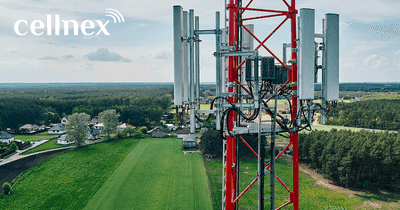
Cellnex Quantum Division
Cellnex Telecom is a Spanish telecommunications infrastructure and services company founded in 2015 and headquartered in Barcelona, Spain, with Quantum Division supporting quantum-safe satellite communications development and quantum networking infrastructure. Cellnex participates in Spain's QKD-GEO quantum key distribution geostationary satellite mission led by Thales Alenia Space and Hispasat, analyzing real use cases with banking sector and terrestrial operators for quantum-secure communications. The company collaborates with Hispasat, Banco de Santander, BBVA, and Telefónica defining business plans for quantum-safe satellite and terrestrial network integration. Cellnex operates telecommunications tower infrastructure across Europe providing potential backbone for quantum-safe communications networks. The company invests in next-generation secure communications technologies including quantum key distribution and post-quantum cryptography preparing infrastructure for quantum computing threats. Cellnex serves telecommunications operators, mobile network operators, broadcasters, and infrastructure sectors requiring quantum-safe communications capabilities and tower infrastructure supporting quantum networking deployments across European markets.

Chelpis Quantum
Chelpis Quantum Corp is a Taiwanese cybersecurity company founded on May 2, 2017, specializing in post-quantum cryptographic technology and quantum-safe solutions. Founded by members from the cryptography laboratory of National Taiwan University, Chelpis' cryptographic systems have captured multiple global NIST post-quantum cryptographic standards, demonstrating world-class expertise. Based in Taipei's Zhongshan District, the company provides zero trust architecture, network defense, quantum migration services, and blockchain security applications to prepare organizations for the post-quantum cryptography era. In August 2023, Chelpis established the Quantum Safe Migration Center (QSMC) in Taiwan to advance PQC research and practical applications. In April 2022, the company secured $2 million USD in funding for cryptographic solutions development. Chelpis collaborates internationally, including Dutch-Taiwanese partnerships to secure the future of digital security. As quantum computers threaten current encryption standards, Chelpis Quantum positions Taiwan as a leader in post-quantum cryptography solutions protecting sensitive data and communications infrastructure.

China Mobile
China Mobile Limited is a Chinese state-owned telecommunications company founded in 1997, headquartered in Beijing, China, world's largest mobile network operator by subscribers. China Mobile deploys quantum communication networks including quantum key distribution (QKD) infrastructure and quantum-safe telecommunications systems across China. The company collaborates with Chinese quantum technology companies advancing practical quantum communications deployments for secure mobile communications and quantum internet development. China Mobile invests in quantum networking research supporting China national quantum communications infrastructure. The company serves Chinese telecommunications markets including enterprise customers, government agencies, and critical infrastructure requiring quantum-safe communications. China Mobile contributes to China quantum technology leadership advancing quantum communications at scale and quantum networking for telecommunications industry representing Chinese telecommunications quantum capabilities.

China Telecom
China Telecommunications Corporation (China Telecom) is a Chinese state-owned telecommunications company founded in 2000, headquartered in Beijing, China. China Telecom deploys quantum communication infrastructure including quantum key distribution (QKD) networks as part of China national quantum strategy. The company demonstrated quantum encrypted video conferencing and quantum secure communications for government and enterprise clients. China Telecom collaborates with Chinese quantum technology providers advancing practical quantum communications deployments across China. The company invests in quantum networking research supporting quantum internet development. China Telecom serves telecommunications markets including enterprises government and critical infrastructure requiring quantum-safe communications. The company contributes to China quantum technology leadership advancing large-scale quantum communications networks and quantum-safe telecommunications infrastructure representing Chinese national quantum capabilities.

China Telecom Quantum Communications Division
China Telecom Quantum Communications Division is a major telecommunications operator deploying quantum key distribution networks across China with significant quantum infrastructure achievements. The state-owned telecom integrates QKD into communications networks. China Telecom has deployed hundreds of kilometers of QKD networks connecting major cities, providing quantum-safe communications services to government and enterprise customers as part of China's national quantum communications infrastructure.

China Unicom
China United Network Communications Group Co., Ltd. (China Unicom) is a Chinese state-owned telecommunications operator founded in 1994, headquartered in Beijing, China. China Unicom deploys quantum communication networks including quantum key distribution (QKD) infrastructure as part of China national quantum communications strategy. The company collaborates with Chinese quantum technology companies advancing practical quantum communications deployments for secure telecommunications. China Unicom invests in quantum networking research supporting quantum internet development and quantum-safe communications infrastructure. The company serves Chinese telecommunications markets including enterprise customers government agencies and critical infrastructure requiring quantum-safe communications. China Unicom contributes to China quantum technology leadership advancing quantum communications networks at national scale and quantum networking for telecommunications industry representing Chinese telecommunications quantum infrastructure development.

Ciena
Ciena Corporation is an American telecommunications networking equipment and software services company founded in 1992, headquartered in Hanover, Maryland. Ciena develops quantum-safe networking solutions including quantum key distribution (QKD) integration, post-quantum cryptography implementations, and quantum-secure optical networks. The company WaveLogic coherent optical technology supports quantum communication infrastructure and quantum networking deployments. Ciena collaborates with telecommunications operators and quantum technology providers advancing quantum-safe network infrastructure. The company serves global telecommunications markets, enterprise networks, cloud providers, and government agencies requiring quantum-safe communications and post-quantum security. Ciena invests in quantum networking research preparing telecommunications infrastructure for quantum internet and quantum-enhanced networking protecting network security against emerging quantum computing threats to current encryption standards.
Cisco Quantum Labs
Cisco Quantum Labs is Cisco Systems Inc.'s quantum networking research division established in Santa Monica and San Jose facilities, founded in 2021. In May 2025, Cisco formally opened its Quantum Labs facility in Santa Monica, unveiling industry-first quantum technologies including network-aware distributed quantum compiler enabling quantum algorithms across multiple networked processors, vendor-agnostic quantum networking framework, and prototype quantum entanglement chip developed with UC Santa Barbara generating one million entangled photon pairs per second at room temperature. Cisco's quantum networking vision accelerates practical quantum computing applications from decades to 5-10 years, creating foundation for quantum internet. In September 2025, Cisco expanded its quantum networking software portfolio with enhanced network orchestration capabilities for quantum key distribution (QKD) networks, enabling enterprise-grade quantum-safe communications infrastructure and integration with existing network management systems for hybrid classical-quantum network deployments. Cisco Quantum Labs serves telecommunications operators, enterprises, government agencies, and cloud providers requiring quantum networking infrastructure.

Craft Prospect
Craft Prospect is a British space technology and satellite communications company founded in 2013, participating in the QKDSat consortium led by Honeywell to develop ultra-secure telecommunications satellites using quantum key distribution technology. The consortium includes Redwire Space, British Telecom, QTLabs Austria, Honeywell Canada, and key players in Germany, Czech Republic, and Switzerland. Craft Prospect brings satellite systems engineering and space technology expertise to quantum-secured satellite communications development. The company collaborates with European Space Agency and industry partners advancing quantum communications infrastructure for government, defense, and commercial applications. Craft Prospect serves government agencies, defense contractors, telecommunications operators, and satellite communication providers requiring quantum-safe satellite systems and space-based secure communications. The company focuses on integrating quantum key distribution technology into satellite platforms, developing operational quantum-secured satellite communications systems protecting critical infrastructure and sensitive government communications from cyber threats and quantum computing attacks.
Crypto4A Technologies
Crypto4A Technologies is a Canadian cybersecurity company developing quantum-safe cryptographic solutions and post-quantum cryptography systems to protect against future quantum computing threats. The company provides quantum-resistant encryption technologies, secure key management systems, and cryptographic hardware security modules designed to maintain security even in the presence of quantum computers capable of breaking traditional encryption methods. Crypto4A serves government agencies, financial institutions, and enterprise customers requiring long-term cryptographic protection, offering consulting services and implementation support for transitioning to quantum-safe security architectures that will remain secure against both classical and quantum computing attacks.

Deutsche Telekom
Deutsche Telekom AG is a German telecommunications company founded in 1995 headquartered in Bonn conducting pioneering quantum communications research and deployments. In 2023 Deutsche Telekom and Qunnect succeeded in stable transmission of entangled photons over 82 kilometers establishing milestone in quantum networking. Deutsche Telekom opened Quantum Lab in Berlin in 2023, a test laboratory including research fiber optic network allowing testing of latest quantum communication technology and quantum security concepts. The company develops quantum key distribution networks for ultra-secure communications and explores quantum networking for telecommunications infrastructure. Deutsche Telekom serves telecommunications operators enterprises government agencies and defense sectors requiring quantum-safe communications and quantum network infrastructure for critical data transmission.

Deutsche Telekom Quantum Division
Deutsche Telekom is a German telecommunications company founded in 1995 and headquartered in Bonn, Germany, with Quantum Division developing quantum-safe telecommunications infrastructure and quantum networking capabilities. In 2024, Deutsche Telekom tested Qunnect's quantum technologies on its fiber networks, advancing practical quantum communications deployments on operational telecommunications infrastructure. The company collaborates with quantum technology providers advancing quantum key distribution (QKD) networks, post-quantum cryptography implementations, and quantum-safe telecommunications systems across European networks. Deutsche Telekom invests in quantum networking research supporting quantum internet development and preparing telecommunications infrastructure for quantum computing threats to current encryption standards. The company demonstrated quantum-secured network connections and deploys quantum-safe communications infrastructure for enterprise customers, government agencies, and critical infrastructure sectors. Deutsche Telekom serves European telecommunications markets requiring quantum-safe communications, quantum networking infrastructure, and post-quantum cryptography implementations protecting network security and customer data against emerging quantum computing capabilities.

DigiCert
DigiCert is a leading certificate authority (CA) and digital security company providing public key infrastructure (PKI), TLS/SSL certificates, and validation services for digital trust. In 2019, DigiCert announced DigiCert Labs, an R&D division focused on post-quantum cryptography and machine learning, and launched the world's first Post-Quantum Security model with a quantum-safe certificate toolkit. DigiCert is implementing NIST PQC algorithms (FIPS 203, FIPS 204, FIPS 205) in their TrustCore SDK's NanoCrypto module to protect against quantum computing threats.
EigenQ
EigenQ is a U.S.-based quantum technology company advancing quantum cybersecurity, quantum internet, and quantum computing. The company offers NIST-certified PQC+ solutions that accelerate government, defense, and enterprise adoption of post-quantum cryptography. EigenQ focuses on quantum-safe security infrastructure and quantum networking technologies. Exhibited at CES 2025 demonstrating quantum cybersecurity solutions.

Encryption Consulting
Encryption Consulting LLC is a Texas-based cybersecurity company founded in 2018, specializing in applied cryptography and post-quantum cryptographic advisory services. Headquartered in Prosper, Texas (Dallas-Fort Worth metropolitan area), the company is changing how organizations approach data protection across their enterprises. Encryption Consulting offers comprehensive post-quantum cryptography (PQC) services to help enterprises identify potential quantum risks and become quantum cyber-ready. Services include cryptographic discovery and inventory scans to build comprehensive asset inventories, implementation of hybrid models combining classical and PQC algorithms ensuring backward compatibility during quantum transitions, full alignment with NIST PQC algorithm standards, and addressing Harvest Now, Decrypt Later (HNDL) threats with proactive cryptographic upgrades. The company's expertise spans PKI (Public Key Infrastructure), Hardware Security Modules, Code Signing, Enterprise Key Management, and other cryptographic solutions. Encryption Consulting partners with leading cybersecurity vendors including Thales and Entrust, positioning itself as a trusted advisor for organizations preparing for the post-quantum cryptography era.

Entrust
Entrust is a digital security company specializing in identity, payments, and data protection with leading expertise in post-quantum cryptography. The company is a participating member of IETF and NIST PQ Competition and announced the Entrust Cryptographic Security Platform in April 2025, the industry's first unified end-to-end cryptographic security management solution supporting all three NIST PQC standards. Entrust PKI as a Service (PKIaaS) supports FIPS 203, FIPS 204, and FIPS 205 PQC algorithms for quantum-safe digital identity protection.

Envietta
Envietta is an American quantum security company founded in 2019, developing hardware-implemented post-quantum cryptography solutions as IP Core for semiconductor integration. The company is one of only three companies worldwide offering post-quantum cryptography as IP Core: PQ Shield (UK), Envietta (USA), and ResQuant (Poland). Envietta develops cryptographic processor designs implemented on FPGA and ASIC microchips for direct integration into electronic devices, providing quantum-resistant encryption resistant to quantum computer attacks. The company implements NIST-approved post-quantum cryptography algorithms including ML-KEM (Kyber), ML-DSA (Dilithium), and SLH-DSA (SPHINCS+) as hardware accelerators and IP cores for semiconductor manufacturers. Envietta serves semiconductor companies, IoT device manufacturers, aerospace contractors, automotive suppliers, and telecommunications equipment vendors requiring hardware-based post-quantum cryptography implementations for chip-level security. The company focuses on high-performance PQC hardware implementations enabling quantum-safe security in resource-constrained embedded systems and high-throughput communications equipment.

Ericsson Quantum
Ericsson is advancing quantum technologies through research in quantum communications, quantum key distribution, and quantum-safe security for telecommunications networks. The company investigates quantum networking solutions for 6G networks, quantum cryptography for secure communications infrastructure, and quantum-enhanced mobile network optimization. Ericsson collaborates with quantum technology companies and research institutions to develop quantum communication protocols, quantum network architectures, and post-quantum cryptographic solutions for telecommunications equipment and network infrastructure. The company's quantum initiatives focus on preparing telecommunications networks for the quantum era, developing quantum-safe security measures, and exploring quantum technologies that could enhance network performance, security, and capabilities for next-generation wireless communications systems.

Eurofiber
Eurofiber is a European telecommunications and fiber optic network provider founded in 2000, headquartered in Amsterdam, Netherlands, deploying quantum key distribution technology across its extensive fiber network. In February 2025, Eurofiber and Q*Bird were awarded 1 million euros at Mobile World Congress Barcelona for their Quantum Key Distribution project by Dutch government. In October 2024, Eurofiber collaborated with Q*Bird to integrate QKD technology into Eurofiber's extensive fiber optic network connecting quantum communication networks in Amsterdam and Rotterdam. In April 2024, QuTech and Eurofiber ran quantum cryptography on existing fiber in an open testbed, demonstrating practical QKD deployment on operational telecommunications infrastructure. The project strengthens collaboration between network provider Eurofiber and quantum security company Q*Bird advancing quantum-safe communications infrastructure in Netherlands. Eurofiber serves telecommunications operators, enterprises, data centers, government agencies, and financial institutions requiring quantum-safe network connectivity and secure communications infrastructure preparing for quantum computing threats to current encryption standards.

ExeQuantum
ExeQuantum offers Post-Quantum Cryptography as a Service (PQCaaS) with flexible APIs, supporting both cloud and on-premises deployment. Provides TLS wrapping and practical migration pathways for quantum-safe encryption. 2024-2025: Positioned as leading PQC-as-a-Service provider following NIST PQC standards finalization (August 2024). Published industry guidance on top 10 PQC vendors shaping quantum-safe future. UK NCSC set 2028 deadline for cryptographic inventory and 2035 for PQC migration completion - creating significant market opportunity. Platform enables enterprises to assess cryptographic vulnerabilities, plan migration strategies, and implement NIST-standardized post-quantum algorithms (ML-KEM, ML-DSA, SLH-DSA) without deep cryptographic expertise. Integrates with existing security infrastructure and CI/CD pipelines. Target markets: governments, banks, healthcare providers.

Flipscloud
Flipscloud is an Indian quantum security company founded in 2020, developing quantum-safe cryptography solutions for cloud security and data protection. The company is recognized among emerging Quantum Cryptography Solutions providers developing innovative approaches to post-quantum security. Flipscloud specializes in quantum-resistant encryption for cloud computing environments, enterprise data protection, and secure communications. The company provides post-quantum cryptography implementations protecting cloud-based applications, data storage, and communications against quantum computing threats. Flipscloud serves enterprises, cloud service providers, financial institutions, and government agencies in India and Asia-Pacific region requiring quantum-safe cloud security solutions. The company focuses on practical implementation of post-quantum cryptography for cloud infrastructure, helping organizations prepare for quantum computing threats while maintaining compatibility with existing systems. Flipscloud addresses India's growing digital economy security needs as the country processes approximately 114 billion digital payments annually requiring quantum-safe cryptographic protection.

Fujikura Quantum Division
Fujikura Ltd. is a Japanese electrical equipment and cable manufacturing company founded in 1885 and headquartered in Tokyo, Japan, with Quantum Division developing optical components and fiber infrastructure for quantum communications networks. Fujikura manufactures specialized optical fibers, photonic components, and fiber optic cables supporting quantum key distribution (QKD) systems and quantum networking deployments. The company develops low-loss optical fibers optimized for quantum communications, single-photon compatible fiber components, and quantum networking hardware. Fujikura collaborates with Japanese telecommunications operators and quantum technology companies deploying quantum-safe communications infrastructure. The company participates in Japan's national quantum secure networking initiatives providing essential optical infrastructure for quantum communications. Fujikura serves telecommunications operators, quantum technology companies, government agencies, and research institutions requiring specialized optical components and fiber infrastructure for quantum communications networks, QKD systems, and quantum internet development. The company brings over 135 years of optical fiber expertise to quantum communications infrastructure supporting Japan's quantum technology leadership.

Harvard University
Harvard University is a private Ivy League research university founded 1636 in Cambridge Massachusetts. Central to Harvard quantum initiatives is Harvard Quantum Initiative uniting researchers from various disciplines to advance quantum science and engineering. In September 2025, a team of Harvard physicists led by Mikhail Lukin (Joshua and Beth Friedman University Professor) achieved a historic breakthrough by building the first quantum computer that can operate continuously for over 2 hours without restarting, published in Nature. The system operates an array of more than 3,000 qubits (neutral atoms) and theoretically could continue indefinitely, representing a massive improvement over existing quantum computers that typically run for milliseconds or at most 13 seconds. The breakthrough was achieved by replenishing qubits in real time, injecting new atoms at a rate of 300,000 per second using an optical lattice conveyor belt system to counteract atom loss and maintain quantum information, with over 50 million atoms cycled through the system during the two-hour demonstration. This transformative achievement demonstrates that quantum computers capable of running forever in practice are now just three years away (down from five+ years previously), marking a critical milestone toward practical, continuously operating quantum computing systems. Harvard Quantum Initiative is one of strongest in country heavily focused on quantum networking quantum chemistry and quantum materials research. Harvard conducts quantum research spanning quantum processors quantum algorithms quantum communication networks quantum simulation and quantum sensing. The university maintains partnerships with leading quantum companies including QuEra Computing and government agencies. Harvard serves quantum research community through fundamental quantum research quantum education programs and technology transfer advancing quantum information science and quantum technology commercialization supporting USA quantum leadership.

HEQA Security
HEQA Security (formerly QuantLR) is an Israeli quantum security company founded in 2018, committed to safeguarding data communication against cyber threats posed by quantum computers. The company focuses on building carrier-grade quantum key distribution (QKD) offerings with products used by world-leading telecom operators, defense organizations, global cloud providers, and financial institutions. HEQA Security ensures protection of data communication against potential threats through groundbreaking security solutions rooted in principles of quantum physics. Leveraging a patented design, HEQA Security's products stand out as the market's most cost-effective and scalable enterprise-grade Quantum Key Distribution solution. The company brings quantum leap for secure communication to telecommunications and enterprise markets. HEQA Security serves telecommunications operators, government agencies, defense contractors, financial institutions, and cloud service providers requiring carrier-grade QKD infrastructure for ultra-secure communications protecting against both classical eavesdropping and quantum computing threats to encryption.

Hispasat
Hispasat is Redeia's satellite services operator founded in 1989 and headquartered in Madrid, Spain, operating satellites providing telecommunications services across Europe, Americas, and North Africa. In January 2025, Hispasat partnered with Thales Alenia Space to start development, manufacturing, verification, and validation phase of the QKD-GEO prototype, Spain's quantum key distribution system from geostationary orbit. The QKD-GEO mission has a budget of 103.5 million euros and 24-month timeline to develop components for quantum key distribution from geostationary orbit, including quantum payload for geostationary satellite and associated ground segment. Hispasat is responsible for designing the geostationary mission and defining the business plan, with support from Banco de Santander, BBVA, Telefónica, and Cellnex analyzing real use cases with banking sector and terrestrial operators. A field test campaign is planned between Spanish islands of La Palma and Tenerife covering 140-km atmospheric link. Hispasat serves telecommunications operators, government agencies, financial institutions, and critical infrastructure requiring quantum-secure satellite communications.

Honeywell Quantum Communications
Honeywell is a multinational technology and manufacturing company founded in 1906, headquartered in Charlotte, North Carolina, with Quantum Communications division developing quantum-secured satellite communications systems. Honeywell leads the QKDSat consortium, a public-private partnership announced in 2024 aiming to develop ultra-secure telecommunications satellites using quantum key distribution technology. In September 2025, Honeywell signed MOU with Redwire Corporation to combine Redwire's quantum platform technology with Honeywell's quantum optical payload, creating fully functional payload and platform by mid-2026. The consortium includes Redwire Space of Belgium; Craft Prospect and British Telecom of the United Kingdom; QTLabs of Austria; Honeywell in Canada; and key players in Germany, Czech Republic, and Switzerland. Honeywell partnered with European Space Agency for quantum data protection from space. The company serves government agencies, defense contractors, telecommunications operators, and critical infrastructure sectors requiring quantum-secured satellite communications protecting sensitive information transmission against cyber threats.

IBM Quantum
In 2024-2025, IBM Quantum unveiled its 156-qubit Heron processor featuring a new architectural approach emphasizing modularity and error mitigation, achieving 16 times better performance and a 25-fold increase in speed over 2022 systems. At the inaugural IBM Quantum Developer Conference in 2024, IBM achieved accurate computations on circuits with 100 qubits and gate depths of 100 and 5,000 two-qubit gate operations in under a day's runtime. IBM introduced multi-chip coupling innovations including 'l-couplers' for linking distant chips via cables and 'm-couplers' for tightly connecting adjacent chips, demonstrated with IBM Quantum Flamingo connecting two Heron R2 chips, with the production-ready Flamingo system expected in 2025. IBM's roadmap extends to 2026 with the Kookaburra system demonstrating the first integration of logical qubit processing with quantum memory, and by 2028, the Starling system will operate 200 logical qubits requiring approximately 10,000 physical qubits using IBM's efficient LDPC codes. November 2025: IBM announced the 120-qubit Nighthawk processor with 218 next-generation tunable couplers, enabling 30% more circuit complexity while maintaining low error rates. IBM achieved 10x speedup in quantum error correction decoding over leading approaches, completed one year ahead of schedule. IBM-Cisco partnership announced (November 20, 2025) to build networked distributed quantum computing infrastructure with first proof-of-concept targeted by end of 2030. IBM claims their LDPC codes approach requires 90% fewer qubits than Google's surface code method. IBM Quantum Loon experimental processor demonstrated all key fault-tolerant computing components for the first time.

ID Quantique
ID Quantique (IDQ) is a Swiss quantum cybersecurity pioneer founded in 2001 as a University of Geneva spinoff that became the world leader in quantum key distribution (QKD) and quantum-safe security solutions, achieving multiple world firsts including the first commercial QKD system deployment in 2004 and breaking distance records with 307km QKD demonstrations, offering comprehensive quantum-safe products including the Cerberis XG and Clavis XG QKD systems serving governments, enterprises, and research institutions across 60+ countries. December 2025: Deployed Slovakia's first national quantum communication network as part of the EU-wide EuroQCI initiative. The skQCI project, developed with Institute of Physics Slovak Academy of Sciences, securely interconnects Slovakia's Presidential Palace, National Security Authority, and Quantum Pavilion of the Slovak Academy of Sciences in Bratislava. November 2025: Expanded QKD network deployments across European financial institutions and government agencies. 2025 Developments: Acquired by IonQ for approximately $250 million, becoming IonQ's subsidiary for quantum networking. Continued expansion of QKD network deployments and quantum-safe security solutions.

IDEMIA
IDEMIA is a multinational technology company specializing in biometric identification, digital security, and identity-related security services. With a global team of 800+ R&D experts, IDEMIA is a world-leading authority in post-quantum cryptography and introduced the first quantum-resistant 5G SIM in 2022. In July 2025, the company launched IDEMIA Sphere Cryptographic Library with 68 classical and post-quantum algorithms. IDEMIA leads the Hyperform consortium developing quantum-safe components for banks, governments, and software companies.

InfiniQuant
InfiniQuant is a German quantum technology company hosted at Max Planck Institute for the Science of Light, using quantum mechanics to generate true random numbers at high speed with research-grade quantum random number generators harnessing quantum randomness for quantum cryptography devices. Led by Imran Khan and Christoph Marquardt from Gerd Leuchs' division, InfiniQuant investigates applications in quantum communication with research programs including Metropolitan Quantum Communication, Satellite Quantum Communication, and Quantum Random Number Generation. The company provides QRNG technology for secure communications and cryptographic applications requiring provably random numbers from quantum processes. InfiniQuant is recognized among leading QRNG suppliers in industry market analyses alongside ID Quantique, KETS, and PicoQuant. Based at Germany's premier quantum optics research center, InfiniQuant bridges fundamental quantum communication research with practical QRNG applications for cryptography, secure communications, and quantum networking infrastructure.

InfiniQuant GmbH
InfiniQuant is a German quantum key distribution company developing QKD systems for secure enterprise and telecom network communications. The company provides quantum-safe communication infrastructure based on quantum key distribution technology to protect against eavesdropping and quantum computer attacks. InfiniQuant serves telecommunications operators, government agencies, and enterprises requiring ultra-secure communications channels protected by the laws of quantum physics.

InnovationQuarter
InnovationQuarter is the regional development agency for Zuid-Holland province in the Netherlands, founded in 2005 and based in The Hague, investing in innovative companies including quantum technology and quantum security startups. InnovationQuarter participated in Q*Bird's 2.5 million euro funding round in May 2024, supporting Delft-based quantum key distribution company. The organization provides investment capital, business development support, and ecosystem connections to high-tech startups and scale-ups in Zuid-Holland region, home to quantum technology clusters in Delft, Leiden, and Rotterdam. InnovationQuarter focuses on deep tech including quantum technologies, photonics, life sciences, and cleantech. The organization serves Zuid-Holland quantum ecosystem connecting startups with QuTech research center, TNO, universities, and corporate partners. InnovationQuarter invests in quantum communications, quantum security, quantum sensing, and quantum computing companies commercializing research from Delft University of Technology and Leiden University. The organization contributes to Netherlands quantum technology leadership building innovation infrastructure and supporting growth of quantum startups in one of Europe's leading quantum technology regions.

Institute of Astrophysics of the Canary Islands Quantum Division
Institute of Astrophysics of the Canary Islands (IAC) is a Spanish astrophysics research center founded in 1982 and headquartered in La Laguna, Tenerife, Spain, with Quantum Division participating in Spain's QKD-GEO quantum key distribution geostationary satellite mission. IAC participates in the large industrial consortium led by Thales Alenia Space developing quantum communications technology for space-based quantum key distribution. The institute brings astrophysics expertise and Canary Islands astronomical facilities to quantum communications research and testing. A field test campaign is planned between Spanish islands of La Palma and Tenerife covering 140-km atmospheric link, validating ground segment and quantum payload functionality under representative conditions before implementing operational mission in orbit. IAC collaborates with Polytechnic University of Madrid, University of Vigo, Thales Alenia Space, and Hispasat advancing quantum communications from space. The institute serves European Space Agency, quantum technology companies, and research institutions requiring space-based quantum communications research, atmospheric quantum transmission testing, and ground station development for satellite QKD systems.

ISARA
ISARA Corporation was a Canadian cybersecurity company founded in 2015 in Waterloo, Ontario, specializing in quantum-safe security solutions and post-quantum cryptography. ISARA developed cryptographic agility solutions enabling organizations to transition to quantum-resistant encryption algorithms protecting against quantum computing threats. The company was acquired by Bri stow Group (now Onboardsecurity) in 2021. ISARA provided quantum-safe security products including post-quantum cryptography libraries, crypto-agility toolkits, and quantum risk assessment services. The company served enterprise customers, government agencies, telecommunications operators, and critical infrastructure sectors requiring quantum-safe security. ISARA contributed to post-quantum cryptography standards development and quantum-safe security best practices advancing quantum-safe cryptography adoption and protecting digital infrastructure against future quantum computing threats to current encryption systems.

KDDI
KDDI Corporation is a Japanese telecommunications operator founded in 1984, headquartered in Tokyo, Japan. KDDI conducts quantum networking research deploying quantum key distribution (QKD) networks and quantum-safe telecommunications infrastructure in Japan. The company collaborates with quantum technology providers advancing practical quantum communications deployments including quantum encryption for secure communications. KDDI explores quantum networking technologies for ultra-secure telecommunications and quantum internet infrastructure development. The company serves Japanese telecommunications markets, enterprise customers, and government agencies requiring quantum-safe communications and quantum network infrastructure. KDDI contributes to Japan National Quantum Technology Innovation Strategy advancing quantum communications and quantum networking for telecommunications industry positioning Japan as quantum technology leader in Asia-Pacific region protecting telecommunications infrastructure against quantum computing threats.

Keyfactor
Keyfactor is a digital trust and cryptographic solutions company headquartered in Cleveland, Ohio, with longstanding presence in the cybersecurity market. In April 2025, Keyfactor announced expanded post-quantum cryptography (PQC) capabilities across its platforms to support enterprises preparing for NIST's 2030-2035 deprecation of classical encryption algorithms. The company developed quantum-resilient public key infrastructure (PKI), digital signing, and certificate lifecycle management solutions. Keyfactor offers the PQC Lab, a free SaaS-based version of its EJBCA Enterprise PKI platform pre-configured to issue quantum-resilient certificates in minutes. New features in Keyfactor Command, EJBCA, and Bouncy Castle enable inventorying PQC certificates, issuing hybrid RSA/ML-DSA certificates, and integrating NIST-standard algorithms with hardware security module support. Keyfactor serves enterprises, government agencies, financial institutions, and critical infrastructure sectors requiring quantum-safe cryptography migration and certificate management for the post-quantum era.
Kloch Quantum Technologies
Kloch Quantum Technologies is an Indian quantum key distribution company developing QKD systems for secure government and enterprise communications. The company provides quantum-safe communication solutions designed for India's growing quantum security infrastructure needs. Kloch Quantum addresses the critical need for quantum-safe communications in government, defense, and financial sectors, supporting India's national quantum mission to develop sovereign quantum technology capabilities.

KPN
Koninklijke KPN N.V. (Royal KPN) is a Dutch telecommunications and IT provider founded in 1989 (privatized from PTT), headquartered in Rotterdam, Netherlands. KPN explores quantum communications including quantum key distribution (QKD) trials and quantum-safe telecommunications infrastructure. The company collaborates with Dutch quantum technology companies and QuTech research center advancing practical quantum communications deployments. KPN investigates post-quantum cryptography and quantum networking capabilities for telecommunications infrastructure. The company serves Netherlands telecommunications markets enterprises and government agencies requiring quantum-safe communications. KPN contributes to Netherlands quantum technology ecosystem advancing quantum communications research and quantum networking for telecommunications industry supporting Dutch quantum technology leadership protecting telecommunications infrastructure against quantum computing threats.

KT Corporation
KT Corporation (formerly Korea Telecom) is a South Korean telecommunications company founded in 1981, headquartered in Seongnam, South Korea. KT conducts quantum communications research deploying quantum key distribution (QKD) networks and quantum-safe security for telecommunications infrastructure. The company demonstrated quantum cryptography implementations and quantum network trials in South Korea. KT collaborates with Korean quantum technology companies and research institutions advancing quantum communications commercialization. The company explores quantum networking for 5G security and future telecommunications infrastructure. KT serves Korean telecommunications markets, enterprise customers, and government agencies requiring quantum-safe communications. KT contributes to South Korea quantum technology strategy advancing quantum communications and quantum security for telecommunications industry positioning South Korea as quantum technology leader protecting telecommunications networks against quantum computing threats.

KuSpace Tech
KuSpace Technologies (also spelled CuSpace or QSpace Technologies) is a Russian startup founded in 2018, partnering with MISIS University and Russian Quantum Center (RQC) on satellite quantum key distribution experiments providing ground station equipment for quantum satellite links. Scientists from MISIS, RQC, and KuSpace conducted joint experiment on quantum cryptography transmission between Russia and China beginning work with China's Mo-tzu (Mozi) quantum satellite in 2019. The ground station in Zvenigorod created by KuSpace enabled exchange of encoded images with Chinese ground station in Nanshan demonstrating quantum-encrypted communication over 3,800 km between station near Moscow and Urumqi via Mozi satellite. In summer 2023, prototype quantum satellite Impulse-1 developed by NUST MISIS and KuSpace Technologies launched from Vostochny cosmodrome with equipment for testing laser communication channels. KuSpace provides quantum satellite communication technologies and ground station infrastructure supporting Russia's quantum communication network development and international quantum cryptography collaborations.

Lawrence Berkeley National Laboratory
Lawrence Berkeley National Laboratory (Berkeley Lab) is a USA national laboratory founded August 26, 1931, located in Berkeley, California, operated by University of California for United States Department of Energy. Berkeley Lab leads Quantum Systems Accelerator (QSA), one of five DOE National Quantum Information Science Research Centers bringing together 80 world-class researchers from 15 partner institutions. QSA catalyzes national leadership in quantum information science to co-design algorithms, quantum devices, and engineering solutions delivering certified quantum advantage in scientific applications. The laboratory conducts quantum computing research spanning quantum processors, quantum algorithms, quantum networking, quantum sensors, and quantum materials. Berkeley Lab operates quantum computing testbeds and advanced characterization facilities for quantum hardware development. The laboratory serves quantum research community collaborating with universities, industry, and government agencies advancing quantum computing for energy, chemistry, materials science, and national security applications requiring quantum computational advantage.

Lawrence Livermore National Laboratory
Lawrence Livermore National Laboratory (LLNL) is a USA federal research facility founded in 1952, located in Livermore, California, operated by Lawrence Livermore National Security LLC for United States Department of Energy and National Nuclear Security Administration. The Livermore Center for Quantum Science focuses on advancing quantum technology to solve national security challenges including quantum computing, quantum sensing, quantum communications, and quantum materials. LLNL conducts quantum computing research spanning quantum algorithms for scientific simulation, quantum error correction, quantum networking, and integration of quantum computing with high-performance computing for national security applications. The laboratory develops quantum technologies for nuclear stockpile stewardship, materials science, cryptography, and sensing. LLNL serves Department of Defense, Department of Energy, and intelligence community requiring quantum computing capabilities for national security, weapons physics simulation, materials discovery, and secure quantum communications advancing quantum advantage for critical national security missions.

Los Alamos National Laboratory
Los Alamos National Laboratory (LANL) is a USA national laboratory founded in 1943 during Manhattan Project, located in Los Alamos, New Mexico, operated by Triad National Security LLC for United States Department of Energy and National Nuclear Security Administration. LANL conducts quantum computing research spanning quantum algorithms, quantum simulation, quantum cryptography, quantum networking, and quantum sensors for national security applications. The laboratory develops quantum technologies for nuclear weapons stewardship, materials science, secure communications, and sensing applications. LANL operates quantum computing testbeds exploring superconducting qubits, trapped ions, and quantum annealing for optimization and simulation problems. The laboratory collaborates with DOE National Quantum Information Science Research Centers and industry partners advancing quantum computing for national security missions. LANL serves Department of Defense, Department of Energy, and intelligence community requiring quantum computing capabilities for weapons physics, cryptanalysis, materials discovery, and quantum-safe cryptography protecting national security information against quantum threats.

Lumen Technologies
Lumen Technologies Inc. (formerly CenturyLink) is an American telecommunications company founded in 1968, headquartered in Monroe, Louisiana. Lumen provides networking infrastructure including fiber optic networks supporting quantum communication deployments and quantum networking research. The company explores quantum key distribution (QKD) integration into telecommunications infrastructure and quantum-safe networking solutions. Lumen collaborates with quantum technology providers advancing practical quantum communications capabilities over existing fiber networks. The company serves telecommunications enterprise and government markets requiring quantum-safe communications infrastructure. Lumen contributes to quantum networking development providing telecommunications infrastructure supporting quantum communications deployments and quantum-safe security implementations preparing network infrastructure for quantum internet and post-quantum security transitions protecting telecommunications networks against quantum computing threats.

Lumenisity
Lumenisity is a UK-based photonics company founded in 2017 as spinout from University of Southampton developing hollow core fiber technology for quantum communications and telecommunications. The company CoreSmart hollow core fibers enable ultra-low latency data transmission and enhanced security ideal for quantum key distribution (QKD) networks. Lumenisity was acquired by Microsoft in 2022 to advance hollow core fiber deployment for cloud and quantum networking infrastructure. The company technology reduces signal latency and improves data security compared to traditional solid core optical fibers. Lumenisity serves telecommunications operators, financial services, cloud providers, and quantum communication networks requiring ultra-fast secure data transmission. The company contributes to quantum communications infrastructure development advancing quantum-safe networking and quantum internet infrastructure.

LuxQuanta
LuxQuanta is a Barcelona-based quantum security startup founded in May 2021 as a spin-off from ICFO (The Institute of Photonic Sciences), specializing in quantum key distribution (QKD) systems. The company develops continuous variable QKD (CV-QKD) technology that provides ultra-secure data encryption and is easier to integrate into existing optical network infrastructures. In March 2023, LuxQuanta launched NOVA LQ™, a high-performing CV-QKD solution for intra-city networks. CEO Vanesa Diaz joined as business development manager in 2021 and became CEO a year later. LuxQuanta won the €50,000 equity-free first prize at the Supernova All-Stars Competition held during GITEX Europe 2025, establishing itself among Spain's top quantum computing companies.

LuxQuanta Technologies
LuxQuanta Technologies is a Chinese quantum communication company developing quantum key distribution systems and quantum secure networks. The company provides QKD equipment and quantum communication infrastructure for China's national quantum communication networks. LuxQuanta is part of China's strategic push to build quantum-safe communications infrastructure, protecting sensitive government and commercial communications from current and future quantum computer threats.

Mbryonics
Mbryonics is an Irish photonics company developing optical systems for high-speed secure communications, satellite communications, and 5G networks. The company won the 2024 EY Established Entrepreneurs of the Year award and secured €17.5 million from European accelerators. Mbryonics' photonic systems technology is relevant to quantum communications and quantum networking applications. The company develops advanced optical components and systems that can support quantum key distribution and other quantum communication protocols. Based in Galway, Mbryonics is a key player in Ireland's growing photonics and quantum technology sector, with applications spanning telecommunications, aerospace, and secure communications.

Mitsubishi Electric Quantum Division
Mitsubishi Electric Corporation is a Japanese multinational electronics and electrical equipment manufacturing company founded in 1921 and headquartered in Tokyo, Japan, with Quantum Division developing quantum communications and post-quantum cryptography solutions. Mitsubishi Electric joined forces with six partners including Toshiba and NTT to build a national quantum secure networking testbed in Japan. The company has been preparing for post-quantum cryptography, ensuring its information security products use quantum-resistant algorithms. Mitsubishi Electric develops quantum key distribution systems, quantum-safe networking equipment, and post-quantum cryptography implementations for telecommunications and critical infrastructure protection. The company invests in quantum technology research supporting Japan's quantum communications infrastructure development. Mitsubishi Electric serves Japanese government agencies, telecommunications operators, financial institutions, defense contractors, and critical infrastructure sectors requiring quantum-safe communications equipment, QKD systems, and post-quantum cryptography implementations. The company contributes to Japan's quantum technology ecosystem advancing practical quantum security solutions for telecommunications and enterprise markets.

NCS Group
NCS Pte. Ltd. (also known as NCS Group, previously National Computer Systems) is a multinational information technology company headquartered in Singapore, founded in 1981 when the Government of Singapore embarked upon initiatives to harness information technology for public and private sectors. The company was privatised in 1996 and became part of Singtel group in 1997. In 2024, IBM and NCS signed an MOU to support Singapore organizations with quantum-safe encryption capabilities to securely protect present data from future quantum-enabled attacks, working together to provide technology solutions, professional services, and strategic expertise for cybersecurity protection. NCS drives client success through digital transformation in AI, cloud computing, blockchain, and quantum-safe technologies. Technology partners include IBM, Microsoft, Oracle, and SAP. NCS serves Singapore government agencies, enterprises, financial institutions, healthcare organizations, and telecommunications operators requiring quantum-safe cybersecurity solutions and post-quantum cryptography implementations preparing for quantum computing threats.

NIST
National Institute of Standards and Technology (NIST) is a USA federal agency founded March 3, 1901, located in Gaithersburg, Maryland and Boulder, Colorado, operating under United States Department of Commerce. NIST conducts quantum computing research developing quantum standards, quantum metrology, post-quantum cryptography standards, and quantum networking protocols. The Joint Quantum Institute (JQI) is collaboration between NIST and University of Maryland conducting fundamental quantum research spanning trapped ions, neutral atoms, superconducting qubits, and quantum simulation. NIST leads National Quantum Initiative coordination through National Quantum Coordination Office housed within White House Office of Science and Technology Policy. In 2024 NIST published first post-quantum cryptography standards (FIPS 203, 204, 205) protecting against quantum computer threats. NIST serves government agencies, industry, and research institutions requiring quantum standards, quantum measurement techniques, and quantum-safe cryptography standards. NIST advances quantum technology through fundamental research, standards development, and technology transfer supporting USA quantum leadership.

Nordic Quantum Labs
Nordic Quantum Labs develops quantum cryptography and quantum-safe security software for Nordic enterprises and government agencies. The company provides post-quantum cryptography implementations, quantum key distribution software, and quantum security consulting. Nordic Quantum Labs works with Norwegian and Scandinavian organizations to prepare for quantum computing security threats. The company's platform helps businesses transition to quantum-resistant encryption while maintaining compatibility with existing systems. Focus areas include telecommunications security, financial services security, and critical infrastructure protection. Based in Oslo, Nordic Quantum Labs collaborates with Nordic research institutions and participates in European quantum security initiatives. The company provides quantum security assessments and develops migration roadmaps for quantum-safe cryptography adoption.

NTT Quantum Technology Division
Nippon Telegraph and Telephone Corporation (NTT) is a Japanese telecommunications company founded in 1952 and headquartered in Tokyo, Japan, with Quantum Technology Division developing quantum communications, quantum key distribution, and quantum networking systems. NTT conducts pioneering quantum networking research deploying QKD networks and quantum-safe telecommunications infrastructure in Japan. The company researches quantum network technologies and quantum security, having demonstrated quantum tokens for secure transactions in 2021. NTT collaborates with Japanese quantum technology companies and government initiatives advancing practical quantum communications deployments. In early 2024, NTT joined forces with Fujitsu, Hitachi, NEC, and Mitsubishi Electric on quantum technology initiatives building national quantum secure networking testbed. NTT invests in quantum cryptography, quantum random number generation, and post-quantum cryptography preparing telecommunications infrastructure for quantum computing threats. The company serves Japanese telecommunications markets, government agencies, financial institutions, and critical infrastructure sectors requiring quantum-safe communications and quantum networking infrastructure supporting Japan's quantum technology leadership.

Oak Ridge National Laboratory
In 2024-2025, Oak Ridge National Laboratory achieved several major quantum computing milestones. In September 2025, Riverlane's Deltaflow 2 real-time quantum error correction system was installed at ORNL, marking the first dedicated real-time QEC integration at a U.S. national laboratory. Also in September 2025, ORNL and Australian-German company Quantum Brilliance inaugurated the United States' first on-site commercial quantum-computer cluster, the first of its kind to integrate a diamond-based quantum processor into a high-performance computing (HPC) environment. On August 29, 2025, ORNL released a comprehensive study outlining software architecture designed to integrate quantum computers with the world's fastest supercomputers, notably the exascale machine Frontier. In November 2024, ORNL added IQM Resonance quantum cloud service to its Quantum Computing User Program. In August 2025, ORNL researchers developed a quantum microscope for nanoscale imaging and a multihop quantum network integrating with fibre-optic infrastructure. These developments demonstrate ORNL's leadership in quantum-HPC integration.

Optus
Optus (Singtel Optus Pty Limited) is an Australian telecommunications company founded in 1981, subsidiary of Singtel, headquartered in Sydney, Australia. Optus explores quantum networking technologies including quantum key distribution trials and quantum-safe telecommunications infrastructure. The company collaborates with Australian quantum technology companies and research institutions advancing quantum communications capabilities. Optus investigates quantum encryption for secure telecommunications preparing network infrastructure for quantum technologies. The company serves Australian telecommunications markets providing mobile broadband and fixed-line services. Optus contributes to Australian quantum technology ecosystem supporting quantum communications research and quantum networking development for telecommunications industry.

Orange Quantum Division
Orange S.A. is a French multinational telecommunications corporation founded in 1990 (originally France Télécom from 1988) and headquartered in Paris, France, with Quantum Division developing quantum-safe telecommunications infrastructure and quantum networking capabilities. Orange conducts quantum networking research deploying quantum key distribution (QKD) networks and quantum-safe communications systems across French and European telecommunications infrastructure. The company collaborates with French quantum technology companies and research institutions including CryptoNext Security, Alice & Bob, and Pasqal advancing practical quantum communications deployments. Orange invests in post-quantum cryptography preparing telecommunications infrastructure for quantum computing threats. The company demonstrated quantum-secured fiber optic network connections for enterprise and government customers requiring ultra-secure communications. Orange serves European telecommunications markets, government agencies, financial institutions, and critical infrastructure sectors requiring quantum-safe communications and quantum network infrastructure. The company contributes to European Quantum Communication Infrastructure (EuroQCI) initiative and French National Quantum Strategy advancing quantum-safe telecommunications at scale.

Patero
Patero is a United States-based quantum security company founded in 2020 that developed a network security solution reducing the exposed attack surface while encrypting data-in-motion with hybrid post-quantum encryption (hybrid-PQC). Patero's hybrid-PQC solution enhances classical cryptosystems with quantum-resistant encryption algorithms selected by the National Institute of Standards and Technology (NIST). The company's approach combines current encryption standards with post-quantum cryptography for defense-in-depth protection against both classical and quantum computing threats. Patero is recognized as a key player in the global Post-Quantum Cryptography Market alongside NXP Semiconductor, Thales, AWS, IDEMIA, and Palo Alto Networks. The company provides enterprise network security solutions implementing NIST-approved PQC algorithms for securing data transmission across corporate networks, cloud environments, and hybrid infrastructure. Patero serves enterprises, government agencies, financial institutions, healthcare organizations, and telecommunications operators requiring quantum-safe data-in-motion encryption protecting against harvest now, decrypt later attacks.

Photarix
Photarix is a 2024-2025 Lancaster University spinout developing Quantum Ring Single-Photon Light-Emitting Diodes (QR SPLEDs) for Quantum Key Distribution - compact, low-cost, room-temperature operation. Founded by Gizem Acar Tekin (CEO) and Professor Manus Hayne (Chief Scientific Officer). November 2025: Showcased at UK National Quantum Technologies Showcase in London. 2026: Invited to host stand at International Cyber Expo in London. First Lancaster spinout through NW CyberCom programme. Funding: European Commission Horizon 2020 (Quantimony doctoral network), Innovate UK Future Telecoms ICURe programme, Research England NW CyberCom (£1.2M initiative). Applications: quantum-secure communications for banking, messaging, data storage. Technology enables on-demand single-photon emission at telecom wavelengths without cryogenic cooling.
Photon Spot
Photon Spot is a California-based company specializing in sub-Kelvin cryogenic systems and superconducting nanowire single-photon detectors (SNSPDs) for quantum technology applications. Founded in 2009 and headquartered in Monrovia, California, the company offers detectors with ultralow dark counts, precise timing resolution, and high quantum efficiency, combined with cryogenic systems operating at temperatures below 1 Kelvin. Photon Spot's products serve quantum communications, quantum computing, quantum sensing, and semiconductor diagnostics applications. The company's ultra-compact, ultra-low vibration cryogenic systems support time-resolved imaging applications benefiting integrated circuit manufacturers and quantum technology researchers. Primary customers include research institutions, national laboratories, and companies engaged in quantum-related research and development. Backed by investors including the National Science Foundation, Photon Spot represents American innovation in single-photon detection technology critical to photonic quantum computing, quantum key distribution, and quantum metrology applications.

Polytechnic University of Madrid Quantum Division
Polytechnic University of Madrid (Universidad Politécnica de Madrid - UPM) is a Spanish public research university founded in 1971 and headquartered in Madrid, Spain, with Quantum Division participating in Spain's QKD-GEO quantum key distribution geostationary satellite mission. UPM is part of the large industrial consortium led by Thales Alenia Space developing quantum communications technology for space-based quantum key distribution systems. The university brings telecommunications engineering and quantum communications research expertise to satellite QKD development. UPM collaborates with Institute of Astrophysics of the Canary Islands, University of Vigo, Thales Alenia Space, and Hispasat advancing quantum-safe satellite communications. The university conducts research in quantum cryptography, quantum optics, and quantum communications protocols for satellite applications. UPM serves European quantum communications research community, quantum technology companies, and government agencies requiring quantum communications research, quantum networking protocols development, and satellite QKD systems engineering. The university contributes to Spanish national quantum strategy and European Quantum Communication Infrastructure (EuroQCI) initiative.

PQCee
pQCee is a Singapore-based quantum cybersecurity startup designing and building post-quantum products and services to protect the next generation of computing against quantum attacks. The company specializes in post-quantum cryptography implementations, quantum-safe security protocols, and consulting services for organizations preparing for the quantum threat. pQCee helps Asian enterprises transition to quantum-resistant cryptography.

PQShield
PQShield is an Oxford University spin-out specializing in post-quantum cryptography from theory to deployment, protecting systems against quantum computer threats with major funding rounds in 2023-2024. The company develops post-quantum cryptographic algorithms, hardware implementations, and security solutions designed to protect against attacks from both classical and quantum computers. PQShield serves semiconductor manufacturers, automotive companies, government agencies, and enterprises requiring quantum-safe security solutions, providing both cryptographic IP and security consulting services.

Princeton University
Princeton University is a private Ivy League research university founded 1746 in Princeton New Jersey. Princeton Center for Complex Materials and Princeton Quantum Initiative provide top training in quantum information science. Princeton conducts quantum research spanning quantum processors quantum algorithms quantum materials quantum networks and quantum simulation. The university quantum programs advance fundamental quantum science and quantum technology development. Princeton maintains research partnerships with government laboratories and quantum computing companies. Princeton serves quantum research community through quantum physics research quantum engineering programs and quantum education advancing quantum information science and quantum technology development supporting USA quantum competitiveness and scientific leadership in quantum computing. November 2025: Researchers at Princeton University demonstrated a quantum memory system achieving coherence times exceeding 1 millisecond, a significant milestone for quantum information storage. This breakthrough could enable more complex quantum algorithms and improve error correction capabilities in future quantum computers. November 2025: Researchers at Princeton University demonstrated a quantum memory system achieving coherence times exceeding 1 millisecond, a significant milestone for quantum information storage. This breakthrough could enable more complex quantum algorithms and improve error correction capabilities in future quantum computers.

Project Eleven
Project Eleven is a US-based cybersecurity company founded in 2021, developing post-quantum cryptographic infrastructure for blockchains and digital assets to secure them against future quantum computing threats. The company specializes in quantum-resistant encryption technologies, post-quantum cryptographic protocols, and blockchain security solutions designed to maintain security even when quantum computers become capable of breaking traditional cryptographic methods. Project Eleven provides quantum-safe security solutions for cryptocurrency platforms, blockchain networks, digital asset management, and decentralized finance applications, helping organizations prepare for the quantum computing era. The company develops cryptographic libraries, security protocols, and consulting services for blockchain companies and cryptocurrency platforms seeking to implement quantum-resistant security measures.

Protiviti Inc. Quantum Computing Services
Protiviti is a global consulting firm with dedicated quantum computing services for post-quantum risk assessments, readiness workshops, and quantum roadmaps, hosting The Post-Quantum World podcast. The firm helps organizations assess quantum computing opportunities and threats, develop quantum strategies, and prepare for post-quantum cryptography transitions. Protiviti serves clients across financial services, healthcare, technology, and government sectors with quantum risk management, quantum computing readiness assessments, and post-quantum cryptography implementation planning.

Q-NEXT Quantum Research Center
Q-NEXT is a U.S. Department of Energy National Quantum Information Science Research Center led by Argonne National Laboratory. Q-NEXT focuses on quantum networking and interconnecting quantum technologies. November 2025: DOE renewed Q-NEXT funding with $125 million over five years to continue building quantum interconnection capabilities. The center develops quantum repeaters, transducers, and networking technologies to connect quantum computers and sensors. Key partners include multiple national laboratories, universities, and industry leaders working on quantum communication and networking technologies.

Q*bird
Q*bird is a spin-off from Delft University of Technology that develops quantum-based hardware and software solutions providing ultra-secure data communications and protection for critical infrastructures. The company has successfully deployed multi-user, multipoint-to-multipoint Quantum Key Distribution (QKD) networks including operational installations in Utrecht connecting data centers, university buildings, and research facilities, and the world's first quantum-safe industrial internet at the Port of Rotterdam. Q*bird won the Dutch IT Channel Award 2025 in the Networking & Edge Innovator category and received €1 million in subsidies to advance QKD technology, with partnerships including Eurofiber to integrate quantum security into commercial networks and ambitious goals to operate 60 quantum networks across Europe, Asia, and North America by targeting 2030.

Qasky Quantum Technology
Qasky Quantum Technology is a Chinese quantum communication company specializing in quantum key distribution systems, quantum secure communication networks, and quantum cryptography solutions for enterprise and government applications. The company develops quantum communication infrastructure including quantum key distribution hardware, quantum network management software, and secure quantum communication protocols for building quantum-safe communication networks across China. Qasky collaborates with Chinese telecommunications companies and government agencies to deploy quantum communication networks for national security applications, contributing to China's national quantum communication infrastructure development and advancing practical quantum cryptography implementations for securing sensitive data transmission across various sectors including finance, healthcare, and government communications.

Qike Quantum
Qike Quantum (QuDoor/Guokaike Quantum Technology) designs quantum communication devices and quantum computers for military, government, finance, telecom, and power sectors in China. The Beijing-based company develops quantum hardware for secure communications and quantum computing. Qike Quantum serves China's national quantum technology strategy by providing quantum equipment for critical infrastructure and government applications requiring quantum-level security and computing capabilities.
QNu Labs
QNu Labs is an Indian quantum security company providing quantum random number generators and quantum key distribution systems for enterprise security applications. The company manufactures QRNG hardware and QKD systems designed for securing sensitive communications in banking, government, and defense sectors. QNu Labs is part of India's national quantum mission to develop sovereign quantum security capabilities. November 2025: QNu Labs successfully demonstrated a 500-kilometer quantum key distribution testbed, marking a significant milestone for India's quantum communications infrastructure. The deployment uses indigenous QRNG and QKD systems for securing critical national communications. 2025 Developments: Expanded QKD network deployments across Indian banking and government sectors. Advanced development of indigenous quantum security solutions supporting India's National Quantum Mission. Deployed quantum-secured communication links for critical infrastructure applications.
Qoro Quantum
Qoro Quantum is building the missing link in quantum computing: a scalable network stack for distributed quantum computing. The company emerged from Munich Quantum Valley and develops software and protocols that enable multiple quantum computers to work together as a distributed system. Qoro Quantum's technology is crucial for creating quantum networks and enabling quantum internet applications.

QphoX
QphoX develops quantum transduction systems (microwave-to-optical conversion) - critical components for quantum networking and quantum data centers. November 2025: Selected by EIC for €10M ($11.5M) equity investment under STEP Scale-Up scheme to strengthen European quantum supply chain. September 2025: Rigetti collaboration awarded $5.8M AFRL contract for superconducting quantum networking. October 2025: Launched Meet-Q project with Welinq and Sorbonne University for optical quantum interconnects. May 2025: NQCC grant with Rigetti to scale optical qubit readout system for 9-qubit Novera QPU. February 2025: Nature Physics publication with Rigetti and Qblox - breakthrough superconducting qubit readout using optical transducer via fiber optics. Part of Quantum Datacenter Alliance with Cisco, Nu Quantum, OQC, Quantinuum.

QRATE
QRATE develops quantum key distribution (QKD) and quantum-secure communication systems, providing hardware and software solutions for quantum-safe data transmission. The Russian company manufactures quantum encryption equipment and offers turnkey quantum communication networks for government and commercial customers focusing on securing critical infrastructure and sensitive data against quantum threats.

QTI
QTI (Quantum Telecommunications Italy) develops, engineers and produces Quantum Key Distribution systems for ultra-secure communications. The company specializes in quantum cryptography hardware and secure quantum communication networks for government, defense, and critical infrastructure applications. QTI provides end-to-end quantum secure communication solutions leveraging Italian expertise in photonics and telecommunications.
QTLabs
Quantum Technology Laboratories (qtlabs) is a Vienna-based spinout from the Austrian Academy of Sciences founded in 2017 by Dr. Thomas Scheidl, Dr. Fabian Steinlechner, and Dr. Rupert Ursin to commercialize scientific research in optical and quantum space communication. qtlabs is the only company to develop telescopes with quantum receivers and satellite tracking software designed for unbreakable quantum communication. The company specializes in Quantum Key Distribution (QKD) systems for terrestrial networks and satellites, with customers including the EU Commission, satellite companies, and critical infrastructure operators. qtlabs won the PHÖNIX Spin-off Award 2023 from Austria Wirtschaftsservice and has over 30 employees. In 2023, qtlabs joined European collaborators developing global quantum internet enabled from space. The company provides consulting services and concept studies for quantum communication applications.

Quantum Bridge Technologies
Quantum Bridge Technologies is a Canadian quantum networking company founded in 2019 as a University of Toronto spinout by Mattia Montagna (CEO) and Hoi-Kwong Lo (CTO), pioneering quantum-safe communications and quantum networking infrastructure. The company develops quantum key distribution systems, quantum repeaters, and quantum-safe cybersecurity solutions, partnering with Juniper Networks to advance industry-first quantum-safe networking solutions for enterprise and government applications. Professor Hoi-Kwong Lo, co-inventor of the all-photonic quantum repeater and ranking among the world's top quantum cryptography researchers, brings decades of experience from Hewlett-Packard and MagiQ Technologies. Quantum Bridge focuses on building quantum networking infrastructure that enables secure quantum communications and distributed quantum computing applications, developing quantum-safe protocols and hardware for protecting critical infrastructure against both classical and quantum computing threats.

Quantum Fabrix
Quantum Fabrix (trading as QFX) is a University of Oxford spinout incorporated in 2024, founded by Dr Joe Goodwin (CTO), Dr Laurent Stephenson (CSO), and Dr Peter Drmota (CIO). The company is headquartered at Begbroke Science Park and builds on world-leading trapped ion quantum computing research from the University of Oxford. In October 2025, QFX raised £2 million (€2.2M) in seed funding led by renowned Silicon Valley investor and Y Combinator co-founder Paul Graham. The company already has a commercially available product: a compact, high-performance atomic source designed to support integration across quantum platforms. QFX provides modular quantum hardware for trapped ion systems, supplying precision modules to build and link devices for quantum computing, sensing, and secure communications. The company is developing the first scalable networked quantum computing architectures, combining individual trapped ions with optical microcavities. Associate Professor and ERC Laureate Dr Joe Goodwin leads the technical vision while his co-founders bring deep expertise from Oxford's quantum research programs.

Quantum Machines Quantum Networking Division
Quantum Machines is an Israeli quantum technology company founded in 2018 and headquartered in Tel Aviv, specializing in advanced control systems for quantum computing and quantum networking. In 2024, Quantum Machines secured $170 million in funding from backers including Intel's investment arm. The company offers hardware and software solutions enabling precise execution of complex quantum algorithms and quantum network operations. Quantum Machines develops quantum control and orchestration platforms supporting quantum computing, quantum communications, and quantum networking applications. The Quantum Orchestration Platform provides real-time control, feedback, and optimization for quantum systems including networked quantum processors and quantum communication systems. The company serves quantum computing providers, quantum networking developers, research institutions, telecommunications operators, and government agencies requiring advanced quantum control systems for distributed quantum computing, quantum communications, and quantum internet infrastructure. Quantum Machines brings Israeli quantum innovation to global markets advancing practical quantum networking and communications systems.
Quantum Optics Jena GmbH
Quantum Optics Jena is a Fraunhofer IOF spin-off specializing in entangled photon pair sources, polarization analyzers, and QKD systems for secure communications. The company completed a seven-figure euro seed funding round in 2021 to commercialize quantum photonic components. Quantum Optics Jena provides the Elvis QKD system for both fiber network and satellite quantum communication applications, offering complete solutions from photon sources to encryption systems for quantum-safe communications infrastructure.

Quantum Security Defence
Quantum Security Defence is a global community and consultancy organization focused on quantum technologies, quantum cybersecurity, and quantum secure communications, founded by Anna and Steve. Operating internationally with a UK base, the organization unites the global quantum supply chain so that adoption is trusted, secure, and resilient. Quantum Security Defence has grown to more than 1,000 members with a 20,000+ fast-growing community and 100+ expert contributors providing global capability. The organization provides enterprise supply chain consulting services via a professional membership model, serving enterprises, governments, and critical infrastructure leaders navigating quantum adoption. Services include guidance through complexity from policy and standards to implementation roadmaps, access to 40-50 hours of expert lectures on quantum technologies and cybersecurity courses, and strategic consulting on quantum strategy yielding 85% cost savings and 4-week capability boosts. Quantum Security Defence operates as both an educational platform and professional consultancy, helping organizations prepare for quantum threats while building quantum-ready infrastructure and security frameworks.

Quantum Xchange
Quantum Xchange is a US cybersecurity company specializing in quantum key distribution and post-quantum cryptography to protect data against quantum and classical threats. The company operates quantum-safe key distribution networks and provides integrated security solutions combining QKD with post-quantum cryptographic algorithms. Quantum Xchange serves financial services, healthcare, and government sectors with quantum-safe security infrastructure, helping organizations prepare for the quantum computing threat to current encryption systems.

Qubitrium
Qubitrium is a Turkish quantum technology company founded in 2020, developing solutions in quantum cryptography, quantum communications, and quantum sensing with a focus on satellite-based quantum key distribution systems. The company is working on a satellite-based quantum key distribution payload and develops quantum communication technologies for secure data transmission and quantum networking applications. Qubitrium provides quantum security solutions, quantum communication protocols, and quantum sensing systems for government, defense, and commercial applications, contributing to Turkey's quantum technology capabilities and advancing quantum technologies in the Middle East and European markets. The company focuses on practical quantum applications for national security, secure communications, and quantum sensing for various industrial and scientific applications.

Quranium
Quranium is the first L1 blockchain designed from ground up for quantum resistance, using SLH-DSA (NIST-approved post-quantum cryptography) transitioning from SPHINCS+. Headquarters in Switzerland with offices in DMCC UAE and Singapore. June 2025: Investment from Animoca Brands (global Web3 leader with 540+ portfolio companies). February 2025: Mainnet launch - first quantum-resistant blockchain mainnet. May 2025: Launched 'Convergence Layer' testnet for quantum security + AI + blockchain integration. November 2024: Core Layer (L1) Testnet with QSafe Wallet. Awards: DMCC Best Web3 Startup 2024, Cointelegraph Best Startup Pitch 2025. 50+ team members globally. Technology protects blockchain networks against future quantum computing threats using lattice-based and hash-based cryptographic schemes resistant to both classical and quantum attacks.

QuTech Solutions
QuTech Solutions develops quantum cryptography and quantum-safe security software for Middle Eastern financial institutions and government agencies. The company provides post-quantum cryptography implementations, quantum key distribution systems, and quantum security consulting services. QuTech Solutions works with UAE and GCC organizations to prepare for quantum computing security challenges. The company's platform helps businesses and government entities transition to quantum-resistant encryption methods. Based in Dubai, QuTech Solutions serves financial services, telecommunications, and critical infrastructure sectors across Middle East. The company collaborates with international quantum security organizations and participates in regional quantum technology initiatives. QuTech Solutions focuses on quantum security solutions tailored to Middle Eastern regulatory requirements and security standards.

Rambus
Rambus is a semiconductor and intellectual property company headquartered in Sunnyvale, California, founded in 1990 by Mark Horowitz, Mike Farmwald, and Geoffrey Tate. Rambus offers Quantum Safe IP solutions that secure data and hardware against quantum computer attacks using NIST and CNSA selected algorithms. The CryptoManager RT-6xx Root of Trust cores support FIPS 203 ML-KEM, FIPS 204 ML-DSA, and FIPS 205 SLH-DSA standards. The Rambus Quantum Safe Crypto Library offers cryptographic algorithms for the Post Quantum Cryptography (PQC) era with focus on performance and reliability. Rambus Root of Trust IP implements quantum-resistant CRYSTALS-Kyber for key-encapsulation and CRYSTALS-Dilithium for digital signatures. The company delivers quantum-safe IP solutions with next-generation Root of Trust for data center security, protecting infrastructure against quantum computing threats. Rambus serves semiconductor manufacturers, data center operators, cloud providers, and IoT device manufacturers requiring quantum-resistant cryptographic hardware implementations.

Redwire Corporation
Redwire Corporation is a space infrastructure company headquartered in Jacksonville, Florida, founded in 2020, specializing in space systems and components. In September 2025, Redwire signed a Memorandum of Understanding with Honeywell to advance the QKDSat project, combining Redwire's quantum platform technology with Honeywell's quantum optical payload to create fully functional quantum-secured satellite communications systems by mid-2026. The QKDSat consortium, led by Honeywell and including Redwire, aims to develop ultra-secure telecommunications satellites using quantum key distribution for government, defense, and commercial applications. The project is backed by the European Space Agency and aims to protect critical infrastructure from cyber threats using quantum encryption. Redwire brings deep space hardware expertise and satellite bus platform development to enable quantum-safe communications from orbit for government agencies, defense contractors, telecommunications operators, and critical infrastructure sectors.

Rigetti Computing
Rigetti Computing is a pioneer in superconducting quantum computing, publicly traded on NASDAQ (RGTI). Completed $350 million ATM equity offering in Q2 2025. Quanta Computer invested $35 million at $11.59/share (closed April 2025). Q3 2025 revenue: $1.95M (-18% YoY), net loss ~$201M (largely non-cash warrant charges). December 2025: Supporting NVIDIA's NVQLink platform to tightly couple AI supercomputers with quantum processors for hybrid workloads. Stock rose 300%+ YTD despite volatile November correction. Major institutional investors: Vanguard (+60.9%, 8.64M shares) and BlackRock (+39.4%, 5.97M shares). November 2025: Launched Cepheus-1-36Q, industry's first multi-chip quantum computer achieving 99.5% median two-qubit gate fidelity (2x improvement over Ankaa-3). Technology roadmap: 100+ qubit chiplet system at 99.5% fidelity by end 2025, 150+ qubits by 2026, 1,000+ qubits by 2027. September 2025: $5.8M Air Force Research Lab contract for quantum networking (with QphoX). DARPA Quantum Benchmarking Initiative Stage A (up to $1M). MOU with C-DAC India for hybrid quantum systems. Montana State University QCORE partnership with Novera QPU installation. Two Novera 9-qubit systems sold for $5.7M. Plans Italian subsidiary expansion. Strategic focus on government, research partnerships, and hardware commercialization. Analyst rating: Moderate Buy with $40.60 average price target.

Riscure
Riscure is an independent security laboratory founded in 2001 with headquarters in Delft, Netherlands, and branch offices in the United States and China. The company specializes in evaluating and improving security of products designed to operate securely in physically and logically hostile environments. Riscure is a market leader in Side Channel and Fault Injection test tools, serving 200+ clients worldwide with security test tools, services, and training. Now part of Keysight, Riscure has over two decades of experience in device security and actively works on post-quantum cryptography security. The Keysight Inspector platform can test implementations of the Dilithium algorithm, one of the NIST-selected PQC algorithms, allowing designers to verify product security against quantum threats. Riscure follows the scientific debate on PQC security and works with early adopters to scrutinize their solutions. The company serves semiconductor manufacturers, smart card vendors, automotive suppliers, and government agencies requiring PQC security validation and testing.

Rogers Communications
Rogers Communications Inc. is a Canadian communications and media company founded in 1960, headquartered in Toronto, Ontario. Rogers explores quantum technologies including quantum-safe security for telecommunications networks and quantum communications research. The company collaborates with Canadian quantum technology companies and research institutions exploring quantum networking capabilities. Rogers investigates post-quantum cryptography preparing telecommunications infrastructure for quantum computing threats. The company serves Canadian telecommunications markets including wireless cable and media services for consumers and businesses. Rogers contributes to Canadian quantum technology ecosystem supporting quantum communications research and quantum-safe security development for telecommunications infrastructure advancing quantum technology adoption in Canadian telecommunications sector protecting network security against emerging quantum computing threats.
Russian Quantum Center
Russian Quantum Center (RQC) is an independent research organization established in 2012 dedicated to advancing quantum physics and practical applications, with more than 170 researchers working across 12 laboratories near Moscow. RQC focuses on quantum computing, simulation, communication, and sensing while developing and commercializing quantum-based technologies and devices. In December 2024, RQC and Lomonosov Moscow State University unveiled Russia's first 50-qubit quantum computer prototype using rubidium neutral atoms trapped with optical tweezers. Rosatom CEO announced completion of 50-qubit ion-based quantum computer with plans to scale to 75 qubits by 2025 as part of roadmap to surpass classical supercomputers by targeting 2030. RQC spun off QRate, developing fiber-optic quantum key distribution (QKD) systems approaching commercial readiness. The center operates under Russia's $790 million government-backed quantum computing initiative coordinated by Rosatom, developing multiple quantum computing platforms for Russia's national quantum strategy.

S-Fifteen Instruments Pte Ltd
S-Fifteen Instruments is a Singapore company developing quantum communication devices including quantum random number generators and QKD systems. The company manufactures QRNG hardware, QKD equipment, and quantum optics components for quantum communication networks. S-Fifteen Instruments serves the growing quantum communications market in Asia-Pacific, providing quantum hardware components for secure communications infrastructure and quantum networking applications.

SandboxAQ
SandboxAQ is an Alphabet spin-out building Large Quantitative Models (LQMs) for biopharma, chemistry, materials science, cybersecurity, and financial services. April 2025: Closed $450M+ Series E with Ray Dalio, Horizon Kinetics, BNP Paribas, Google, NVIDIA joining existing investors. July 2025: Additional $95M secondary offering (oversubscribed) bringing total to ~$1B at $5.6B valuation. Investors: Rizvi Traverse, Forge Global, Ava Family Office. November 2025: Joined DoD Defense Innovation Unit TQS program for quantum-enabled Magnetic Navigation (MagNav). AQNav completed 450+ flight hours including USAF missions. October 2025: Launched OpenCryptography.com for cryptographic risk detection in open-source software. Market positioning: leading PQC and quantum sensing company with major defense contracts, Google/NVIDIA backing, and active government deployments.

Sandia National Laboratories
In August 2024, scientists at Sandia National Laboratories, collaborating with Arizona State University, received $17 million in funding from Sandia's Laboratory Directed Research program to develop compact integrated microsystems that carry quantum information using light, scaling down large-scale optical systems to chip size for applications in advanced computing and secure communications. Researchers are fabricating small photonic integrated circuits (PICs) at Sandia's MESA complex to achieve the same capabilities as large optical tables. Sandia is participating in the Quantum Collaborative and serves as a core partner of the Southwest Advanced Prototyping Hub (SWAP Hub), led by Arizona State University, aiming to jumpstart American competitiveness in the semiconductor industry. In January 2024, the University of New Mexico and Sandia National Laboratories partnered to establish the Quantum New Mexico Institute (QNM-I), aiming to make New Mexico a national hub for quantum science and attract global talent and quantum companies.

SDT
SDT Inc. (Quantum Standard Technology) is a South Korean quantum technology company founded in 2017 with headquarters in Seoul, pioneering quantum computing, quantum cloud, quantum communication, and quantum sensing commercialization. Founded by CEO Jiwon Yune, who studied physics and electronic engineering at MIT and worked as a researcher at MIT-Harvard University Research Center and KIST Quantum Information Research Center, SDT is leading development of South Korea's first full-stack quantum computer. In August 2024, SDT secured 10 billion KRW (approximately $7.5 million USD) in Pre-IPO investment from Shinhan Venture Investment to commercialize quantum computers, with milestones to develop a 64-qubit superconducting quantum computer by 2026 and photonic integrated circuit quantum computers by 2027. SDT is jointly developing quantum processing units based on silicon spin and diamond nitrogen-vacancy quantum technologies with Seoul National University and the Korea Institute of Science and Technology. The company is advancing South Korea's National Strategy for Quantum Technology and building the domestic quantum ecosystem.

Sealsq
Sealsq develops post-quantum cryptography semiconductors and security solutions to protect IoT devices and digital infrastructure against quantum threats. The company provides secure chips, PKI services, and managed security services with quantum-resistant algorithms, serving sectors including healthcare, automotive, industrial IoT, and government applications requiring long-term data security.
SealSQ Quantum Satellites
SealSQ is launching six satellites in 2025 for commercial quantum-secure communications, representing a major commercial QKD space milestone. The Swiss-US company develops satellite quantum communications. SealSQ's constellation will provide commercial quantum-safe communication services via satellite, enabling global quantum encryption for enterprises and governments requiring secure communications immune to quantum computer attacks.

SignQuantum
SignQuantum develops quantum-resistant digital signature technologies for enterprises and government agencies. In 2025, the company entered an exclusive distribution agreement with ITTI for quantum-resistant digital signatures across Latin America. SignQuantum provides post-quantum cryptography solutions that protect digital signatures and authentication systems from quantum computing threats.

SilQ Connect
SilQ Connect is a Quebec-based quantum technology startup that secured pre-seed funding to develop microwave-optical quantum interconnects, addressing key infrastructure challenges in quantum computing networks. The company specializes in developing quantum interconnect technologies that enable communication between quantum processors and quantum computing systems, focusing on microwave-optical conversion technologies essential for scaling quantum computing architectures. SilQ Connect works on quantum networking infrastructure, quantum communication protocols, and quantum system integration technologies that enable distributed quantum computing and quantum networking applications. The company contributes to Canada's quantum technology ecosystem by advancing quantum interconnect technologies and quantum networking capabilities for next-generation quantum computing systems.
Single Quantum
Single Quantum, founded in 2012 as a spin-off from TU Delft, is a European leader in Superconducting Nanowire Single Photon Detectors (SNSPDs) technology. Their flagship Eos system achieves over 90% detection efficiency, ultra-high timing resolution below 15 picoseconds, count rates exceeding 80 MHz, and dark count rates below 10 Hz. In 2025, Single Quantum partnered with CERN's Quantum Technology Initiative and Qunnect for quantum networking experiments, with CERN integrating their detectors with White Rabbit time-synchronization technology to achieve sub-nanosecond alignment of distant nodes. The company has installed photon detector systems across the United States, Europe, Canada, UK, Japan, China, Australia, Israel, and South America. Their detectors are essential for quantum key distribution (partnered with Toshiba in 2024 to extend QKD range over 300km), quantum computing readout, and quantum sensing applications requiring the highest performance single photon detection.
Single Quantum B.V.
Single Quantum is a Dutch company providing superconducting nanowire single photon detectors, partnering with Toshiba in 2024 to extend QKD range to over 300 kilometers. The company manufactures high-performance single photon detectors essential for quantum key distribution, quantum computing, and quantum sensing applications. Single Quantum's superconducting nanowire detector technology enables record-breaking quantum communication distances and provides critical measurement capabilities for quantum research and commercial quantum technologies.

Singtel
Singapore Telecommunications Limited (Singtel) is a Singaporean telecommunications conglomerate founded in 1879, headquartered in Singapore. Singtel actively explores quantum technologies including quantum key distribution (QKD) for secure communications and quantum networking infrastructure. The company collaborates with Centre for Quantum Technologies and other quantum research institutions advancing practical quantum communications deployments in Asia-Pacific region. Singtel invests in quantum-safe security preparing telecommunications infrastructure for post-quantum cryptography and quantum network development. The company serves telecommunications markets across Asia-Pacific region including enterprise customers government agencies and critical infrastructure sectors requiring quantum-safe communications. Singtel positions Singapore as quantum communications hub advancing quantum technology adoption across telecommunications networks and preparing for quantum internet infrastructure.

Sixscape
Sixscape Communications is a Singapore-based cryptographic authentication and communications company founded in 2014 by chief scientist Lawrence Hughes and former CEO Victor Tang, focused on digital certificate-based security across email, voice/video/chat communications, IoT, and password-less authentication. Sixscape builds Crypto Agility into solutions, working with Certification Authorities and Quantum Cryptography industry vendors to deliver Quantum Safe technology across platforms ensuring customers are protected from future quantum attacks. The company is currently developing quantum safe algorithms for use in digital certificates, digital signatures, and encryption. Sixscape raised $1.6 million in funding through Series A in 2016, listed among globally established players in the post-quantum cryptography market. Sixscape contributes to Singapore's National Quantum-Safe Network initiative, providing quantum-resistant security infrastructure for Southeast Asian enterprises transitioning to post-quantum cryptography standards.

Sixscape Communications
Sixscape Communications is a Singapore-based cybersecurity company founded in 2016, specializing in post-quantum cryptography solutions for network security and secure communications. The company develops quantum-safe encryption technology protecting against both classical and quantum computing threats. Sixscape is recognized among emerging Quantum Cryptography Solutions providers and key players in the global Post-Quantum Cryptography Market. The company provides PQC implementations for telecommunications networks, enterprise communications, and IoT device security. Sixscape collaborates with Singapore government agencies and telecommunications operators advancing quantum-safe network infrastructure as part of Singapore's National Quantum-Safe Network initiatives. The company serves telecommunications operators, enterprises, government agencies, and IoT platform providers requiring post-quantum cryptography for securing network communications, protecting sensitive data transmission, and implementing quantum-resistant encryption algorithms. Sixscape focuses on practical PQC deployment for existing network infrastructure preparing organizations for the transition to quantum-safe security standards.

SK Telecom Q-HSM
SK Telecom's quantum-enhanced hardware security module (Q-HSM) combines QRNG, physical unclonable functions (PUF), and post-quantum cryptography, released commercially in 2024. The major Korean telecommunications company has integrated quantum security technologies into a comprehensive security platform. SK Telecom's Q-HSM represents a milestone in commercial quantum security deployment, combining multiple quantum and quantum-safe technologies into enterprise security infrastructure for telecommunications and beyond.

SK Telecom Quantum Technology Center
SK Telecom Quantum Technology Center operates the Spin Quantum Computing Center with Korea University and Caltech, launching the Q-HSM quantum-enhanced hardware security module in 2024. The major Korean telecommunications operator is developing quantum communications infrastructure. SK Telecom's quantum division combines QKD networks, QRNG technology, and post-quantum cryptography to provide comprehensive quantum-safe security solutions for telecommunications and enterprise customers.

Sparring Capital Partners
Sparring Capital Partners is a European venture capital firm founded in 2019, focusing on deep tech and enterprise software investments including quantum security companies. In March 2025, Sparring Capital Partners led Quantum Industries' 9.5 million euro seed financing round alongside Findus Venture and KGAL, supporting Vienna-based quantum secure communications company. The firm invests in early-stage and growth-stage technology companies developing quantum cryptography, cybersecurity, enterprise software, and deep tech solutions. Sparring Capital Partners brings capital, strategic expertise, and industry connections to quantum security startups commercializing quantum communications technologies. The firm serves European quantum technology ecosystem connecting startups with corporate partners, research institutions, and follow-on investors. Sparring Capital invests in quantum key distribution companies, post-quantum cryptography developers, quantum networking startups, and quantum-safe communications providers building practical commercial quantum security solutions. The firm contributes to European quantum technology growth supporting companies developing quantum-safe infrastructure for critical communications, government agencies, financial institutions, and telecommunications operators.

SPTel
SPTel is a joint venture company of ST Engineering and SP Group, serving as a leading provider of next-generation telecommunications and digital solutions in Singapore with strong focus on innovation and reliability. SPTel uses unique fiber pathways combining leased SP Group infrastructure and owned fiber pipes laid alongside power network cables, having connected 90% of Singapore's commercial data centers. In November 2022, SPTel and SpeQtral announced success on initial trials toward setting up Quantum-Secure Networks on SPTel's diverse fiber network, the first such trials in Singapore. In November 2023, SPTel and SpeQtral were jointly appointed by the Infocomm Media Development Authority of Singapore (IMDA) to build the National Quantum-Safe Network Plus (NQSN+), Singapore's first nationwide quantum-safe network. The combination of SPTel's capabilities in building diverse networks with SpeQtral's deep expertise in Quantum Key Distribution (QKD) technology advances development of robust and resilient NQSN+. SPTel serves enterprises, government agencies, data centers, and telecommunications operators requiring quantum-safe network infrastructure.

Swisscom
Swisscom AG is a Swiss telecommunications provider founded in 1998 (privatized from PTT), headquartered in Ittigen near Bern, Switzerland. Swisscom conducts quantum key distribution (QKD) trials and quantum-safe telecommunications research as part of Swiss Quantum Initiative. The company collaborates with Swiss quantum technology companies including ID Quantique deploying practical quantum communications networks. Swisscom invests in post-quantum cryptography preparing telecommunications infrastructure for quantum computing threats. The company serves Swiss telecommunications markets enterprises and government agencies requiring quantum-safe communications. Swisscom contributes to Swiss quantum technology ecosystem advancing quantum communications and quantum networking for telecommunications industry positioning Switzerland as quantum-safe telecommunications leader in Europe protecting communications infrastructure and customer data against emerging quantum computing threats to encryption standards.

Technical University of Denmark
Technical University of Denmark (DTU) is a public technical university founded in 1829, located in Kongens Lyngby, Denmark. DTU conducts quantum research advancing quantum photonics quantum communications and quantum technologies. The university Center for Silicon Photonics advances integrated quantum photonics development. DTU researchers contribute to quantum hardware quantum networks and quantum applications. The university collaborates with Danish and European quantum companies advancing quantum technology commercialization. DTU serves quantum research community through quantum research quantum education and technology transfer supporting Danish quantum technology ecosystem and Nordic quantum innovation.
Technology Innovation Institute
Technology Innovation Institute (TII) is an applied research institute founded in 2020 based in Abu Dhabi, United Arab Emirates, part of Advanced Technology Research Council. TII Quantum Research Centre focuses on quantum computing, quantum communications, and quantum cryptography research. The institute develops quantum technologies including quantum key distribution systems, quantum secure communications, and quantum computing algorithms. TII collaborates with international quantum research institutions and quantum technology companies advancing quantum technology development in Middle East region. The institute serves UAE national quantum strategy and quantum technology ecosystem development. TII invests in quantum infrastructure, quantum research facilities, and quantum education programs positioning UAE as quantum technology hub in Middle East and advancing quantum technology capabilities for national security and technological leadership.

Telefonica
Telefónica S.A. is a Spanish multinational telecommunications company founded in 1924, headquartered in Madrid, Spain. Telefónica explores quantum technologies including quantum key distribution (QKD) for secure communications, quantum networking, and post-quantum cryptography for telecommunications infrastructure. The company collaborates with quantum technology providers and research institutions deploying quantum communication networks across Spain and Latin America. Telefónica invests in quantum-safe security preparing telecommunications infrastructure for post-quantum security transitions. The company serves telecommunications markets across Europe and Latin America including enterprise customers, government agencies, and critical infrastructure sectors requiring quantum-safe communications. Telefónica contributes to European quantum communications infrastructure development advancing quantum technology adoption in telecommunications sector and positioning Spain as quantum communications leader in Europe and Latin America.

Telenor
Telenor ASA is a Norwegian telecommunications company founded in 1855 (modern form 1994), headquartered in Fornebu, Norway. Telenor explores quantum technologies including quantum-safe security for telecommunications networks and quantum communications research. The company collaborates with Nordic quantum technology companies and research institutions advancing quantum technology adoption in telecommunications sector. Telenor investigates post-quantum cryptography preparing telecommunications infrastructure for quantum computing threats. The company serves Norwegian and international telecommunications markets including Nordic and Asian regions. Telenor contributes to Nordic quantum technology ecosystem supporting quantum communications research and quantum-safe security development for telecommunications infrastructure advancing quantum technology adoption in Nordic telecommunications sector preparing for post-quantum security transitions.

Telia Company
Telia Company AB (formerly TeliaSonera) is a Swedish telecommunications company founded in 1853 (modern form 2002), headquartered in Solna, Sweden. Telia explores quantum technologies including quantum-safe security for telecommunications networks and quantum communications research. The company collaborates with Nordic quantum technology companies and research institutions advancing quantum technology adoption in telecommunications sector. Telia investigates post-quantum cryptography preparing telecommunications infrastructure for quantum computing threats. The company serves Nordic and Baltic telecommunications markets. Telia contributes to Nordic quantum technology ecosystem supporting quantum communications research and quantum-safe security development for telecommunications infrastructure.

Telstra
Telstra Group Limited (formerly Telstra Corporation) is an Australian telecommunications company founded in 1975 (privatized 1997), headquartered in Melbourne, Australia. Telstra conducts quantum networking trials deploying quantum key distribution (QKD) demonstrations and exploring quantum-safe telecommunications infrastructure. The company collaborates with Australian quantum technology companies including Q-CTRL and Silicon Quantum Computing advancing practical quantum communications capabilities. In October 2025, Telstra and Silicon Quantum Computing announced results from a joint initiative taking quantum computing out of the lab and into the telecommunications industry, marking a new milestone in Australia's journey towards quantum-enabled digital infrastructure. Telstra explores quantum encryption for secure communications and quantum networking for future telecommunications infrastructure. The company serves Australian telecommunications markets, enterprise customers, and government agencies requiring quantum-safe communications and quantum technology exploration. Telstra contributes to Australian quantum technology ecosystem advancing quantum communications and quantum networking for telecommunications industry positioning Australia as quantum technology leader in Asia-Pacific region.

Telsy
Telsy is an Italian cybersecurity company that expanded into quantum key distribution and quantum-safe security solutions for government and defense applications. With decades of experience in cryptography and secure communications, Telsy provides QKD systems and post-quantum cryptography solutions to protect critical national security communications. The company serves Italian government, defense, and critical infrastructure sectors with quantum-enhanced security technologies integrated into national secure communications networks.

Telus
Telus Corporation is a Canadian telecommunications company founded in 1990 (origins to 1908), headquartered in Vancouver, British Columbia. Telus explores quantum technologies through partnerships with Canadian quantum companies and quantum research institutions. The company investigates quantum-safe security for telecommunications infrastructure and quantum networking capabilities. Telus collaborates with quantum technology providers exploring practical quantum applications for telecommunications including quantum encryption and quantum-enhanced network optimization. The company serves Canadian telecommunications markets, enterprise customers, and healthcare sectors requiring quantum-safe communications and quantum technology exploration. Telus contributes to Canadian quantum ecosystem supporting quantum technology adoption in telecommunications sector advancing quantum communications research and preparing telecommunications infrastructure for quantum-safe security transitions protecting Canadian telecommunications networks.

Thales Alenia Space QKD-GEO
Thales Alenia Space partnered with Hispasat to develop the world's first quantum key distribution system from geostationary orbit. The aerospace company is developing space-based QKD. The QKD-GEO program aims to enable global quantum-safe communications from geostationary satellites, providing continuous quantum encryption key distribution coverage over large geographic areas for government and commercial secure communications.

Thales Alenia Space Quantum Division
Thales Alenia Space is a joint venture between Thales (67%) and Leonardo (33%), founded in 2007 and headquartered in Cannes, France, with quantum technology division developing space-based quantum communications systems. In January 2025, Thales Alenia Space partnered with Hispasat to develop the QKD-GEO prototype, Spain's quantum key distribution system from geostationary orbit, with 103.5 million euro budget. Thales Alenia Space leads a large industrial consortium including Spanish and European companies, with participation from entities specialized in quantum communications: Institute of Astrophysics of the Canary Islands (IAC), Polytechnic University of Madrid, and University of Vigo. The company develops quantum payloads for geostationary satellites and associated ground segments for quantum-secure communications from space. Field test campaigns are planned between La Palma and Tenerife covering 140-km atmospheric links. Thales Alenia Space serves government agencies, defense organizations, telecommunications operators, and critical infrastructure sectors requiring satellite-based quantum key distribution for ultra-secure space-to-ground communications.
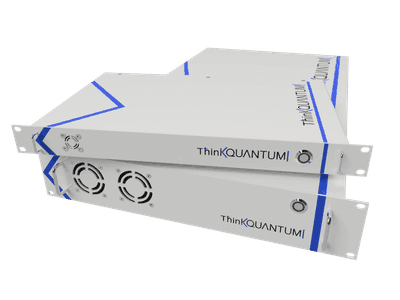
ThinkQuantum
ThinkQuantum offers complete solutions for cybersecurity and communication systems based on quantum technologies, covering quantum random number generators, quantum key distribution, and satellite quantum communications. The Italian company develops both terrestrial and space-based quantum communication systems for secure data transmission. ThinkQuantum works on advancing European quantum communication infrastructure.

Toshiba Quantum Technology Division
Toshiba Quantum Technology Division is based in Cambridge, United Kingdom, headed by Andrew Shields, operating as part of Toshiba Europe Limited's Cambridge Research Laboratory. Toshiba started quantum cryptography research in 1999 and manufactures the Multiplexed QKD System at their Cambridge UK base. In March 2025, Toshiba Europe Limited launched a commercial QKD system integrating post-quantum cryptography (PQC) using NIST's ML-KEM standard, offering enhanced quantum-safe security. In May 2024, Toshiba developed a QRNG fully integrated into semiconductor chips ready for mass manufacture. The division demonstrated record-breaking QKD transmission distances and pioneered quantum-secured network deployments across Europe and Asia. Toshiba collaborates with telecommunications operators including BT Group and global financial institutions to deploy quantum-safe communications infrastructure. The company serves telecommunications operators, government agencies, financial institutions, and critical infrastructure sectors requiring commercial-grade quantum key distribution systems and quantum-safe networking equipment.

TU Delft
Delft University of Technology (TU Delft) is a public technical university founded in 1842, located in Delft, Netherlands. TU Delft hosts QuTech, world-leading quantum research institute collaboration between TU Delft and TNO advancing quantum computing and quantum internet. QuTech develops quantum processors including spin qubits in silicon and superconducting qubits advancing scalable quantum computing. TU Delft researchers contribute to quantum algorithms quantum error correction quantum networks and quantum hardware. The university has produced quantum technology spinouts and maintains strong European quantum partnerships. TU Delft serves quantum research community through fundamental quantum research quantum education and technology transfer advancing quantum computing and quantum internet development supporting Netherlands and European quantum technology leadership.

Turing
Turing is a quantum technology company founded by Prof. Seth Lloyd (MIT) and Dr. Michele Reilly developing portable quantum memory devices and quantum-secure communications systems. The company focuses on making quantum entanglement a commodity through distributed networks of quantum Random Access Memory (qRAM). Turing produces portable quantum hard drives called Turing QuBE units designed for quantum entanglement storage and distribution, supporting applications including quantum key distribution (QKD) and quantum computing connectivity. Founded in 2014, Turing combines techniques of traditional and quantum machine learning to develop practical applications for quantum computers across multiple architectures including IBM, Google, IonQ, Honeywell, and Xanadu. The company has strong focus on autonomous vehicle applications and quantum-secure communications.
Unitary Zero Space Oy
Unitary Zero Space is a Helsinki-based quantum computing consultancy firm founded in 2020 by Topias Uotila (Founder & Qubit Zero) that has set out to build capabilities in quantum computing through education while securing industry from challenges of quantum technologies, building on expertise in cybersecurity sphere. Technology independent quantum computing and quantum technology services company that educates and advises clients in creating and securing business in the second quantum revolution. Three main service areas: 1) Commercialize quantum technologies through consulting, 2) Build capabilities in quantum computing through education, 3) Secure business from challenges of quantum technologies with expertise in cybersecurity. Serves both large enterprises and quantum startups, working with various research institutions and participating in projects related to quantum machine learning, business models, and national security. Contributing to Finland's position as Europe's quantum computing powerhouse.

University of Maryland
University of Maryland is a public research university founded in 1856, located in College Park, Maryland. UMD hosts Joint Quantum Institute (JQI) and Joint Center for Quantum Information and Computer Science (QuICS) conducting world-class quantum research. The university advances ion trap quantum computing quantum algorithms quantum networks and quantum technologies. UMD has produced quantum technology spinouts including IonQ. The university serves quantum research community through fundamental quantum research quantum education and technology transfer. UMD contributes to USA quantum technology leadership through breakthrough quantum research and quantum technology commercialization positioning Maryland as quantum technology hub.

University of Oxford
University of Oxford is a collegiate research university founded circa 1096, located in Oxford, England, oldest university in English-speaking world. Oxford conducts world-leading quantum research through Oxford Quantum Information Science group, Department of Physics, and Oxford Quantum Circuits spinout. The university advances quantum computing quantum cryptography quantum communications and quantum technologies. Oxford researchers contribute to ion trap quantum computing quantum algorithms quantum error correction and quantum hardware development. The university has produced numerous quantum technology spinouts including Oxford Quantum Circuits and maintains partnerships with quantum companies. Oxford serves quantum research community through fundamental quantum research quantum education and technology transfer advancing quantum information science and supporting UK quantum technology leadership positioning Oxford as global quantum research leader.

University of Vigo Quantum Division
University of Vigo (Universidade de Vigo) is a Spanish public research university founded in 1989 and headquartered in Vigo, Galicia, Spain, with Quantum Division participating in Spain's QKD-GEO quantum key distribution geostationary satellite mission. The university is part of the large industrial consortium led by Thales Alenia Space developing quantum communications technology for space-based quantum key distribution. University of Vigo brings expertise in telecommunications, photonics, and quantum optics to satellite QKD research and development. The university collaborates with Institute of Astrophysics of the Canary Islands, Polytechnic University of Madrid, Thales Alenia Space, and Hispasat advancing quantum-safe satellite communications infrastructure. University of Vigo conducts research in quantum communications, quantum cryptography protocols, and photonic quantum technologies for space applications. The university serves European quantum research community, quantum technology companies, and government agencies requiring quantum communications research, quantum optics expertise, and satellite QKD technology development. The university contributes to Spanish quantum technology ecosystem and European quantum communications infrastructure initiatives.

Verizon
Verizon Communications Inc. is an American multinational telecommunications conglomerate founded in 1983, headquartered in New York City, taking multifaceted approach to quantum technologies focusing on quantum-safe security, quantum networking, and quantum-enhanced AI. Verizon performed quantum-based security trial in Washington DC in 2020 claiming to be one of first US carriers to pilot use of quantum key distribution. The company explores quantum networking for secure communications and quantum-enhanced AI for network optimization. Verizon invests in post-quantum cryptography preparing telecommunications infrastructure for quantum threats. Verizon serves telecommunications, enterprise, government, and defense sectors requiring quantum-safe communications and quantum network infrastructure collaborating with quantum technology providers advancing quantum communications and quantum networking for 5G and future telecommunications networks.

Vodafone
Vodafone Group PLC is a British multinational telecommunications company founded September 16 1982 headquartered in Newbury Berkshire experimenting with quantum key distribution and quantum-safe security technologies for telecommunications networks. Vodafone is among leading telcos experimenting with and deploying quantum technology for network optimization wave propagation and cybersecurity applications. The company invests in post-quantum cryptography preparing telecommunications infrastructure for quantum threats. Vodafone explores quantum networking technologies for ultra-secure communications and quantum-enhanced network management for 5G and future telecommunications infrastructure serving global telecommunications markets enterprise customers government agencies and critical infrastructure sectors.

Xairos Systems
Xairos Systems Inc. is a Lone Tree, Colorado-based space telecommunications company founded in 2019 by David Mitlyng and Dr. James Troupe, disrupting Position, Navigation, and Timing (PNT) through patented Quantum Clock Synchronization (QCS) technology. The company leverages quantum communications and atomic clock technology to provide high-precision, high-security time distribution on a global scale for space applications. Xairos' QCS protocol enables satellite accuracy and reliability improvements critical for defense and commercial space operations. The company was selected into the Techstars Space Accelerator in 2021 and has secured contracts with the US Department of Defense to advance quantum timing technology for military applications. Xairos addresses the critical need for GPS-independent timing and synchronization systems resilient to jamming and spoofing, serving aerospace, defense, and telecommunications sectors requiring ultra-precise time distribution across satellite constellations and ground infrastructure.

XT Quantech
XT Quantech is a Chinese quantum technology company developing quantum random number generators and quantum communication systems for security applications. The company provides QRNG devices and quantum key distribution solutions for government, military, and enterprise customers in China. XT Quantech is part of China's growing quantum security industry, supporting the national strategy to build quantum-safe communications infrastructure and protect sensitive information from quantum computer threats.

Yale University
Yale University is a private Ivy League research university founded 1701 in New Haven Connecticut. Yale University has established itself as leader in quantum research fostering collaboration across physics engineering and computer science with Yale Quantum Institute serving as central hub bringing together researchers to explore quantum information processing quantum materials and quantum sensing. Yale conducts quantum research spanning superconducting qubits quantum processors quantum algorithms quantum error correction and quantum networks. Yale quantum programs have produced significant breakthroughs in superconducting quantum computing and quantum information processing. Yale serves quantum research community through fundamental quantum research quantum education programs and industry partnerships advancing quantum computing and quantum technologies.
Related Categories
EuroQCI Initiative
The European Quantum Communication Infrastructure (EuroQCI) is building a secure quantum communication network spanning all 27 EU member states. This pan-European initiative will integrate quantum technologies into existing telecom infrastructure for government and critical infrastructure protection.
View EuroQCI Partners